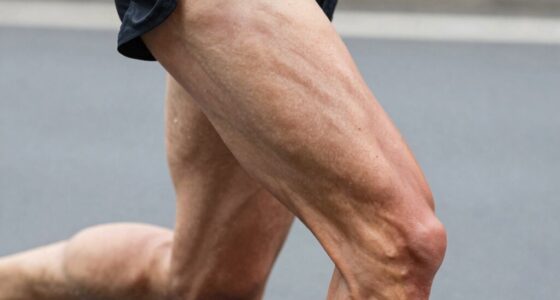
After intense intervals, a proper breathing reset can help calm your nervous system and speed recovery. Focus on slow, deliberate breaths—inhale deeply through your nose and exhale slowly through your mouth or nose. As you breathe, visualize releasing tension from your shoulders, neck, and jaw. This not only relaxes your muscles but also signals your body to switch from stress to relaxation. Keep practicing these techniques to reveal more tips for effective recovery.

Get workout gear delivered free with Prime
- Fast, free delivery on millions of items
- Prime Video, Amazon Music and more included
- Member-only deals all year
Key Takeaways
- Practice slow, deliberate breathing—inhale deeply through the nose, exhale slowly through the mouth—to activate relaxation.
- Focus on air movement to stay present, reducing residual tension from intense effort.
- Incorporate muscle relaxation during exhalation by imagining releasing tension in shoulders, neck, and jaw.
- Use mindfulness to disconnect from stress, enhancing mental clarity and recovery.
- Consistent breathing resets strengthen resilience, enabling quicker calmness after high-intensity intervals.
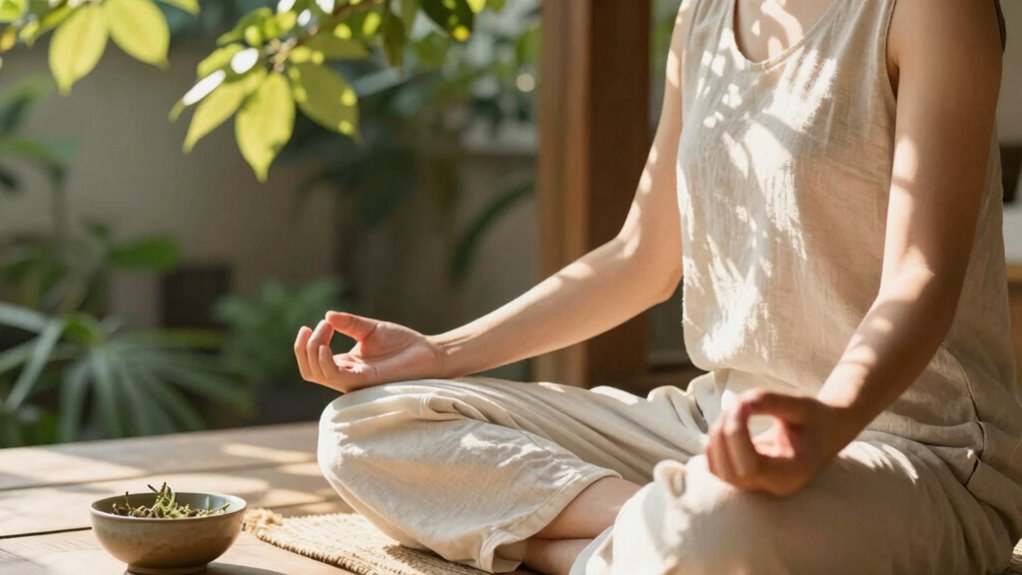
After intense physical exertion or stressful moments, your body needs a quick way to recover and regain calm. That’s where a simple breathing reset can make a big difference. When you’re pushing through hard intervals, your breathing tends to become rapid and shallow, which signals your nervous system to stay in a heightened state. To counter this, you can employ mindfulness techniques that focus on controlled breathing, helping you shift from a state of stress to one of relaxation. These techniques aren’t complicated; they’re easy to incorporate into your recovery routine and can significantly reduce post-exercise tension.
One effective method is to focus on slow, deliberate breaths. Inhale deeply through your nose, filling your lungs completely, then exhale slowly through your mouth or nose. This kind of deep breathing encourages muscle relaxation by increasing oxygen flow and calming your nervous system. As you breathe consciously, pay attention to the sensation of air moving in and out, anchoring your mind to the present moment. This mindfulness approach disconnects you from residual stress and helps reset your body’s stress response. Incorporating awareness of your breathing pattern can also enhance your recovery and promote overall mental clarity. Additionally, understanding how air quality impacts your breathing can help optimize your environment for better relaxation and recovery. Recognizing the importance of biodiversity in maintaining clean air can indirectly support your breathing health.
Focus on slow, deep breaths to relax muscles and calm your nervous system after intense effort.
Incorporating muscle relaxation techniques alongside mindful breathing can further enhance your recovery. As you exhale, imagine releasing tension from your muscles, especially in your shoulders, neck, and jaw. Tight muscles often accompany high-intensity efforts, and consciously relaxing them sends signals to your nervous system that it’s safe to calm down. Developing an awareness of your respiratory system can help you better understand your body’s response to stress and recovery. Moreover, paying attention to your body’s signals can help you identify when you need additional rest or recovery strategies. Over time, this synergy helps you recover faster and prepares you mentally and physically for the next set or activity.
Practicing these techniques consistently strengthens your ability to recover quickly after hard intervals. The key is to stay present, avoid rushing through your breaths, and be intentional in your relaxation efforts. As you become more familiar with mindfulness techniques, you’ll notice that your body responds more rapidly to stress, enabling you to regain composure faster. This not only benefits your immediate recovery but also builds resilience over time, making your workouts more efficient and less taxing mentally and physically. The next time you finish a challenging set, take a moment to reset your breathing, focus on muscle relaxation, and let your body settle into a calmer, more balanced state.
As an affiliate, we earn on qualifying purchases.
Frequently Asked Questions
Can Breathing Resets Improve Long-Term Stress Management?
Yes, breathing resets can improve long-term stress management. By practicing mindfulness techniques and meditation regularly, you train your body to respond more calmly to stressors. These techniques help regulate your nervous system, reduce anxiety, and promote relaxation. Over time, consistent breathing resets strengthen your resilience, making it easier to stay centered during difficult moments. Incorporating these practices into your routine can lead to lasting benefits for your mental and emotional well-being.
How Often Should I Practice Breathing Resets Daily?
You should practice breathing techniques and relaxation exercises daily, ideally twice a day, to maximize their calming effects. Consistency helps your body become more responsive to these resets, reducing stress over time. Incorporate simple breathing exercises during moments of tension or as part of a morning and evening routine. This regular practice enhances your ability to stay calm, especially after hard intervals or stressful situations.
Are There Any Health Conditions That Restrict Breathing Reset Techniques?
If you have respiratory conditions like asthma, medical contraindications might restrict certain breathing reset techniques. For example, someone with severe COPD may find rapid breathing exercises worsen their symptoms. Always consult your healthcare provider before starting new practices, especially if you have underlying health issues. They can guide you on safe methods tailored to your condition, ensuring you benefit without risking your health.
Can Breathing Resets Replace Other Relaxation Methods?
Breathing techniques can complement relaxation exercises but shouldn’t replace them entirely. While resets help quickly calm your mind and body, relaxation exercises like meditation or progressive muscle relaxation offer longer-term benefits. You can incorporate breathing resets into your routine to enhance overall stress management, but for thorough relaxation, combining different methods is most effective. Always consider your health conditions and consult a professional if unsure.
What Are the Best Times of Day to Do Breathing Resets?
Think of your day as a flowing river—timing your breathing resets acts as gentle stones guiding your flow. Morning routines are perfect for setting a peaceful tone, helping you start clear and calm. In the evening, use breathing resets as your wind-down to wash away stress. Both times are ideal for calming your mind, anchoring your day with tranquility, and preparing you for restful sleep.
As an affiliate, we earn on qualifying purchases.
Conclusion
Remember, just like a sailor uses the calm after a storm to regain their strength, your breath can be your anchor amid life’s turbulent moments. When those hard intervals leave you gasping, taking a mindful breath resets your rhythm, grounding you in the present. Embrace this simple yet powerful tool, and you’ll find your inner calm restored—ready to face whatever comes next, just as dawn follows the darkest night.
As an affiliate, we earn on qualifying purchases.
As an affiliate, we earn on qualifying purchases.
Halloween Picks
halloween
As an affiliate, we earn on qualifying purchases.