

To spot overreaching early, pay attention to both physical and emotional cues. Watch for persistent fatigue, lingering soreness, performance drops, and physical aches. Notice if sleep becomes irregular or if you skip meals and stay dehydrated. emotionally, look for increased irritability, anxiety, difficulty concentrating, and a lack of motivation. Regular self-checks and tracking energy levels help catch issues early. Keep paying attention, and you’ll discover more strategies to stay balanced and recover effectively.

Get workout gear delivered free with Prime
- Fast, free delivery on millions of items
- Prime Video, Amazon Music and more included
- Member-only deals all year
Key Takeaways
- Regularly assess mental and emotional well-being for signs of irritability, anxiety, or decreased motivation.
- Monitor persistent physical fatigue, soreness, or performance decline beyond normal recovery times.
- Track sleep quality and consistency, noting trouble falling asleep or feeling unrefreshed upon waking.
- Observe behavioral changes like mood swings, concentration issues, or emotional resilience dips.
- Incorporate rest days, vary workouts, and ensure proper nutrition and hydration to support recovery.
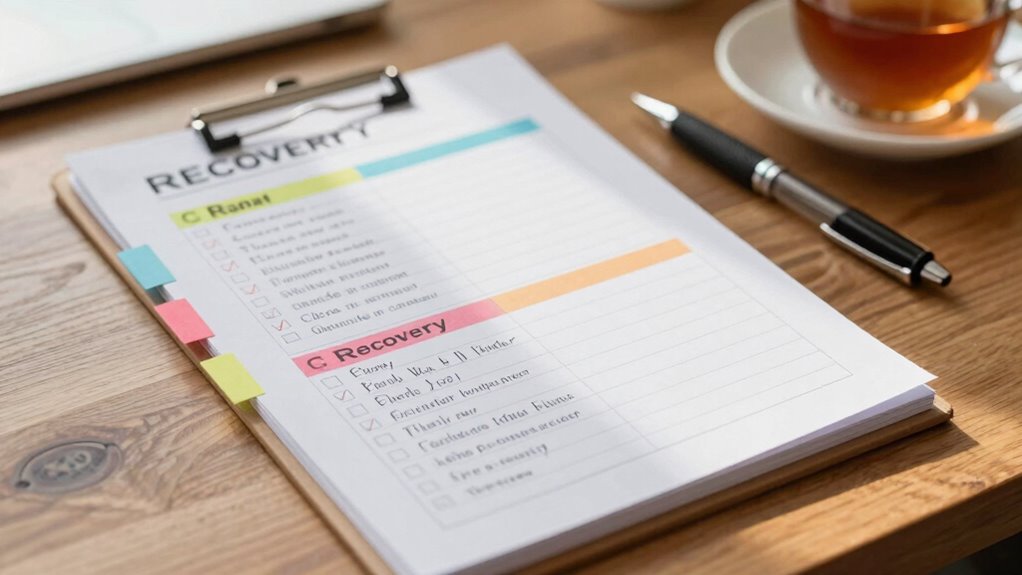
Recovery can be a challenging journey, but having a clear checklist can make the process smoother and more manageable. When you’re pushing your limits, it’s easy to overlook early signs of overreaching. Recognizing these signs early allows you to adjust and prevent setbacks, keeping your progress on track. One of the most essential aspects to monitor is your emotional resilience. If you notice increased irritability, mood swings, or feelings of frustration that seem disproportionate to your current workload, it’s a sign you might be overextending yourself. Emotional resilience acts as your mental buffer, helping you bounce back from stress, but when it diminishes, it signals your body and mind are under strain.
Monitoring emotional resilience helps prevent overreaching and supports long-term progress.
Physical endurance is equally fundamental. Pay attention to persistent fatigue that doesn’t improve with rest, muscle soreness that lingers beyond typical recovery times, or a decline in performance during workouts. These physical cues suggest your body isn’t fully recovering and may be heading toward overtraining. Tracking your energy levels daily can help you spot patterns indicating you’re pushing too hard. If you find yourself consistently drained or unable to complete workouts with your usual intensity, it’s time to reassess your training plan.
Your sleep quality is another key marker. If you’re experiencing trouble falling asleep, waking up feeling unrefreshed, or noticing irregular sleep patterns, your recovery may be compromised. Sleep is when your body repairs tissues and restores emotional balance; disruptions here can accelerate overreaching. Incorporating a consistent sleep routine and sleep hygiene practices can enhance your recovery and prevent early signs of overtraining. Alongside sleep, your nutritional intake plays a pivotal role. Skipping meals, neglecting proper hydration, or not eating enough to support your activity level can hinder recovery and lead to early signs of overtraining.
Don’t ignore your mental state. Increased feelings of anxiety, difficulty concentrating, or a lack of motivation can all be symptoms that your emotional resilience is waning. These psychological signals often precede physical symptoms, serving as early warning signs. Regularly check in with yourself mentally and emotionally, and be honest about how you’re feeling.
Finally, listening to your body’s signals is paramount. If you feel constant soreness, joint aches, or a general sense of exhaustion that doesn’t improve, it’s time to cut back. Incorporating rest days, varying your workouts, and maintaining a balanced diet are essential strategies. The key is to stay vigilant, using your checklist as a guide to catch overreaching early, so you can adapt your recovery approach, protect your physical endurance, and bolster your emotional resilience for long-term progress. Recognizing early signs through performance monitoring can significantly enhance your recovery process.
As an affiliate, we earn on qualifying purchases.
Frequently Asked Questions
How Long Should I Wait Before Reassessing My Recovery Progress?
You should wait about one to two weeks before reassessing your recovery progress. This allows your body enough time to respond to training and helps you identify any training plateau or signs of overreaching. Keep track of your recovery timeline, noting improvements or stagnation. If no progress occurs after this period, consider adjusting your routine or consulting a professional to prevent overtraining and optimize your results.
What Are Common Signs of Overtraining I Should Watch For?
Think of your body as a finely-tuned engine; overtraining is like pushing it beyond its limits. Signs include persistent fatigue, decreased performance, and irritability. Watch for increased training intensity without improvement, and note if sleep quality drops or becomes restless. If you experience muscle soreness that lingers or a sense of burnout, it’s a clear sign you’re overdoing it. Listening early helps prevent long-term setbacks.
Can Mental Fatigue Affect Physical Recovery?
Mental fatigue can definitely affect physical recovery. When your mind is exhausted, it hampers your body’s ability to repair tissues and restore energy levels effectively. You might notice increased soreness or fatigue despite resting. To optimize physical recovery, pay attention to mental fatigue signals, prioritize mental health, and incorporate rest and relaxation techniques. Managing mental stress guarantees your body can fully recover and perform at its best during future workouts.
Are There Specific Recovery Tools That Help Prevent Overreaching?
Yes, certain recovery modalities help prevent overreaching. Techniques like active recovery, massage, and foam rolling promote blood flow and reduce muscle soreness, lowering overtraining symptoms. Incorporating proper sleep and nutrition also plays an essential role. By using these tools consistently, you can catch early signs of overreaching and adjust your training accordingly, ensuring you stay balanced and avoid setbacks in your fitness journey.
How Does Nutrition Influence the Recovery Process?
Ever wonder how nutrition can speed up your recovery? It plays a crucial role by optimizing nutrient timing—fueling your muscles when they need it most—and maintaining hydration strategies to prevent fatigue. Proper nutrition replenishes glycogen, repairs tissues, and reduces soreness. Are you giving your body the right nutrients at the right time? Prioritize balanced meals, hydration, and strategic nutrient intake to support your recovery and avoid overreaching.
sleep monitoring device for athletes
As an affiliate, we earn on qualifying purchases.
As an affiliate, we earn on qualifying purchases.
Conclusion
By keeping this recovery checklist handy, you’ll spot overreaching before it snowballs into a bigger problem. Trust your instincts and listen to your body—don’t ignore the early warning signs. Remember, slow and steady wins the race, so give yourself permission to pause and recover fully. When you stay vigilant and follow these steps, you’re more likely to bounce back stronger and avoid setbacks. After all, an ounce of prevention is worth a pound of cure.
hydration and nutrition tracking app
As an affiliate, we earn on qualifying purchases.
As an affiliate, we earn on qualifying purchases.
As an affiliate, we earn on qualifying purchases.
Halloween Picks
halloween
As an affiliate, we earn on qualifying purchases.