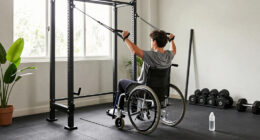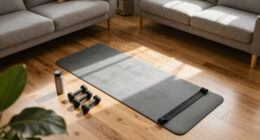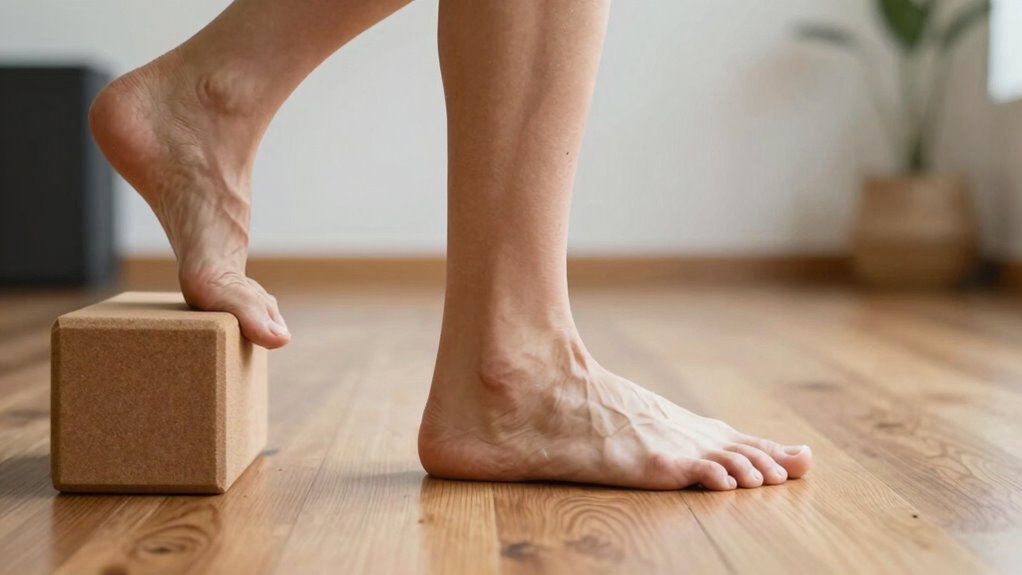

You can boost your ankle mobility by incorporating quick exercises into your daily routine. Try doing ankle circles or flexing and pointing your toes during brief breaks or while sitting at your desk. Heel raises and calf stretches take just a few seconds and help strengthen and stretch your ankles. Consistently adding these simple movements throughout the day can lead to noticeable improvements. Keep going, and you’ll discover even more effective ways to enhance your ankle flexibility and strength.

Get workout gear delivered free with Prime
- Fast, free delivery on millions of items
- Prime Video, Amazon Music and more included
- Member-only deals all year
Key Takeaways
- Incorporate quick ankle circles or flexion/extension exercises during daily activities like sitting or waiting.
- Perform calf stretches and heel raises for a few seconds multiple times throughout the day.
- Push off strongly with each step when walking or climbing stairs to naturally enhance mobility.
- Use short, targeted stretches during breaks or while watching TV to improve flexibility gradually.
- Make ankle mobility exercises a daily habit, integrating them into routines for consistent progress.
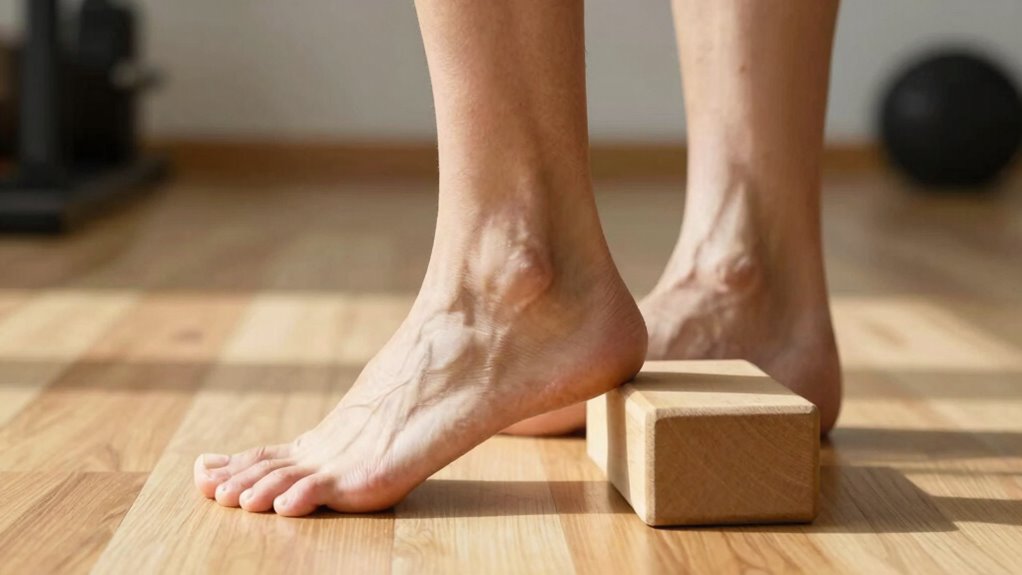
Having good ankle mobility is essential for everyday movements and athletic performance, yet many people neglect this crucial aspect of their flexibility. The good news is, you don’t need to dedicate hours to see results. Small, consistent actions can make a significant difference, especially if you incorporate simple ankle strengthening and flexibility exercises into your daily routine.
Start by focusing on ankle strengthening. You can do this easily at home without any equipment. One effective move is to perform ankle circles. Sit or stand and lift one foot off the ground. Rotate your ankle clockwise for 10 to 15 seconds, then switch to counterclockwise. This movement improves joint stability and helps loosen tight muscles. Another simple exercise is heel raises: stand with your feet shoulder-width apart, rise onto your toes, hold for a second, then lower your heels back down. Do two sets of 10 reps. These strengthen the calves and improve ankle support, making your joints more resilient to injury.
Perform ankle circles and heel raises daily to strengthen and support your ankles effortlessly at home.
Flexibility exercises are equally important and don’t require extra time if you integrate them into your routine. For example, try calf stretches. Stand facing a wall, place your hands on it, step one foot back, and keep that heel flat on the ground. Lean into the wall until you feel a stretch in your calf. Hold for 20 seconds, then switch sides. This stretch releases tightness and enhances ankle range of motion. Another quick stretch involves kneeling on one knee with the other foot flat in front, then gently pushing your hips forward. This targets the ankle and Achilles tendon, improving overall flexibility. Incorporating joint mobility exercises can further enhance your routine by increasing the range of motion and reducing stiffness. Regularly practicing these exercises can also help prevent ankle injuries by strengthening the supporting structures around the joint.
You can also incorporate ankle mobility into daily activities. When walking or climbing stairs, focus on your ankle movement. Push off strongly with each step, emphasizing ankle dorsiflexion and plantarflexion. If you sit at a desk for long periods, take a moment every hour to perform ankle circles or flex and point your toes repeatedly. These small movements add up and prevent stiffness over time. Incorporating joint stability exercises can further enhance the effectiveness of your routine.
The key is consistency. By integrating these brief exercises into your day—whether during breaks, before workouts, or while watching TV—you’ll gradually improve your ankle mobility. Remember, it’s not about spending hours, but about making tiny, regular efforts. Over time, your ankles will become more flexible, stronger, and better equipped to support your daily activities and athletic pursuits.
ankle mobility exercises equipment
As an affiliate, we earn on qualifying purchases.
As an affiliate, we earn on qualifying purchases.
Frequently Asked Questions
Can Daily Activities Naturally Improve Ankle Mobility?
Yes, daily activities and movement naturally improve ankle mobility. Incorporate simple ankle exercises like heel raises and ankle circles into your routine, and stay active with walking or light jogging. Daily movement helps keep your ankles flexible and strong without extra time commitment. By staying consistent, you’ll notice better mobility over time, making activities like running or jumping easier and reducing injury risk.
Are There Specific Foods That Support Joint Flexibility?
Think of your joints as delicate bridges needing proper care. You should include anti-inflammatory foods like berries, leafy greens, and fatty fish in your diet, which support flexibility. Nutritional supplements such as omega-3s and turmeric can also promote joint health. By nourishing your body with these, you help maintain the elasticity and mobility of your joints, making everyday movements smoother and less painful.
How Does Footwear Affect Ankle Mobility?
Footwear considerably affects your ankle mobility through its ergonomics and support. Shoes with proper ergonomics allow natural movement, helping to maintain flexibility. Conversely, footwear with excessive ankle support or stiff soles can restrict motion, weakening your ankle muscles over time. To improve mobility, choose shoes that provide stability without limiting movement, and avoid overly supportive or rigid footwear that may lead to stiffness and decreased flexibility.
Is Ankle Mobility Linked to Overall Balance?
Yes, ankle mobility is linked to your overall balance. When your ankle strength improves through exercises like proprioception training, your body better senses its position, enhancing stability. Increased mobility allows for better movement control, reducing the risk of falls. Incorporate quick ankle stretches and balance drills into your routine to strengthen ankle muscles and boost proprioception, which helps maintain your balance during daily activities and workouts.
Can Stretching Cause Injury if Done Incorrectly?
Stretching can cause injury if done incorrectly, so prioritizing stretching safety is essential. You should avoid overstretching and perform movements gently, listening to your body’s signals. Proper injury prevention involves warming up beforehand and maintaining good form. If you experience pain or discomfort, stop immediately. When done safely, stretching improves flexibility and mobility without risking injury, helping you stay active and healthy.
ankle stretching and strengthening tools
As an affiliate, we earn on qualifying purchases.
As an affiliate, we earn on qualifying purchases.
Conclusion
In just a few minutes, you can open your ankles like opening a door to greater freedom. Picture your ankles as flexible roots reaching deeper into the earth, anchoring you stronger with each gentle stretch. Feel the ease flow through every step, as mobility blossoms like sunlight breaking through clouds. Keep moving with purpose, and watch how these small moments transform your stride into a confident dance—simple, quick, and powerful.
As an affiliate, we earn on qualifying purchases.
As an affiliate, we earn on qualifying purchases.
Fall Picks
fall essentials
As an affiliate, we earn on qualifying purchases.