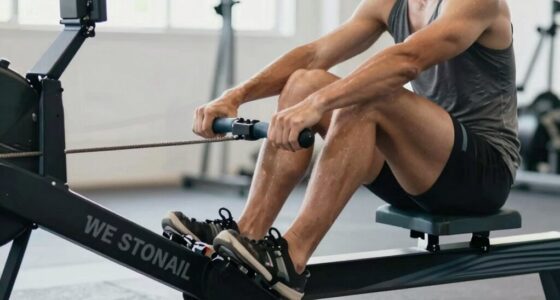
To stay tall while rowing, focus on engaging your core and maintaining proper form cues. Sit tall with shoulders relaxed, chest open, and back straight. Drive with your legs first, keeping your torso upright and shoulders down. As you pull back, squeeze your shoulder blades and keep elbows close, avoiding leaning backward. During recovery, extend your arms smoothly while hinging at the hips. Mastering these cues helps improve your posture and core strength—discover more tips to keep you aligned for the long term.
Key Takeaways
- Sit tall with shoulders relaxed, chest open, and back straight to promote proper alignment during rowing.
- Engage your core by pulling the belly button toward the spine to support upright posture.
- Drive with legs first, maintaining a flat back and avoiding rounding or overarch during the stroke.
- Keep shoulders down and relaxed, elbows close to sides, to prevent hunching and promote upper back engagement.
- Extend arms smoothly during recovery, hinge at the hips, and maintain core engagement to reinforce tall posture.

If you’re looking for an effective way to improve your posture, rowing offers a dynamic solution. Not only does it provide a full-body workout, but it also promotes proper alignment through deliberate form cues. One of the key benefits of rowing is its ergonomic benefits, which help you build strength in the muscles responsible for maintaining good posture. When you focus on proper technique, you activate your core muscles, which play a vital role in supporting your spine and keeping you tall throughout the day.
Rowing enhances posture by strengthening core muscles and promoting proper, ergonomic alignment through mindful technique.
To maximize these benefits, start by sitting tall on the rowing machine with your shoulders relaxed and chest open. Keep your back straight, avoiding slouching or overarching, which can lead to poor posture habits over time. As you prepare to row, engage your core by gently pulling your belly button toward your spine. This engagement stabilizes your torso and creates a strong, supported foundation for each stroke. Remember, a tight core isn’t about tensing up—it’s about activating those deep muscles that keep your spine aligned.
As you initiate each stroke, focus on driving with your legs first. Push through your heels, keeping your knees tracking in line with your toes, and maintain an upright torso. Your arms should extend without overreaching, and your shoulders remain down and relaxed. At the catch position, your shins should be nearly vertical, and your back should stay flat—not rounded or overly arched. This position ensures you’re engaging the right muscles and protecting your spine. Additionally, maintaining muscle engagement throughout the movement helps reinforce correct posture and prevents slouching.
When you pull back on the handle, think of squeezing your shoulder blades together, which enhances upper back engagement and encourages a tall posture. As you finish the drive, your elbows should be close to your sides, and your torso should stay upright, avoiding any leaning backward. During the recovery phase, extend your arms forward smoothly, then hinge at the hips while maintaining your core engagement, preparing for the next powerful stroke. Staying mindful of these cues helps reinforce correct movement patterns and prevents slouching or overextending.
Throughout your rowing session, remember that consistent core engagement and attention to ergonomic positioning develop muscle memory. Over time, these habits translate into better posture outside the gym. By focusing on form cues—like keeping your back straight, engaging your core, and moving efficiently—you’ll build strength and alignment that last well beyond your workout. Rowing becomes not just a fitness routine, but a practical tool to help you stand taller, move more confidently, and reduce the risk of postural issues.
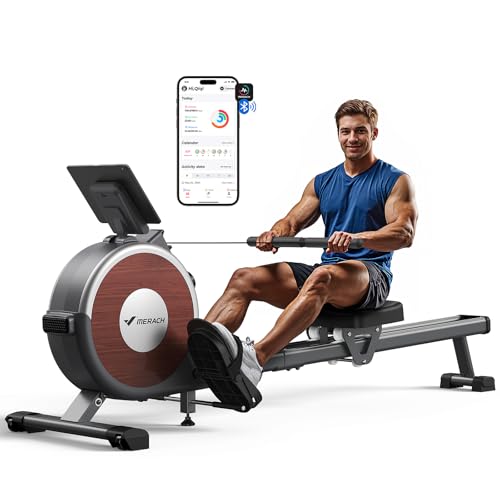
Merach Rowing Machine, Magnetic Rower Machine for Home, 16 Levels of Quiet Resistance, Dual Slide Rail with Max 350lb Weight Capacity, App Compatible with LCD Monitor, Q1S
MERACH APP: Our App offers various courses and programmed exercises for you, Taking the courses can bring your…
As an affiliate, we earn on qualifying purchases.
As an affiliate, we earn on qualifying purchases.
Frequently Asked Questions
Can Rowing Improve Posture if I Have Existing Back Pain?
Yes, rowing can improve your posture if you have back pain, but it depends on your condition. It helps by promoting better spinal alignment and strengthening your core stabilization muscles. Focus on maintaining proper form, engaging your core, and avoiding overexertion. Always consult with a healthcare professional before starting, especially if you have existing back issues, to guarantee rowing benefits your specific situation safely.
How Often Should I Practice Rowing for Lasting Posture Benefits?
You should practice rowing 3 to 4 times a week for lasting posture benefits. Maintaining a consistent training frequency is key to reinforcing good habits and strengthening muscles that support your spine. Don’t overdo it—listen to your body and allow recovery days. Consistency is essential; regular sessions will help you develop better posture over time, reducing the risk of back pain and promoting long-term spinal health.
Are There Any Common Mistakes That Compromise Posture During Rowing?
You might think you’re engaging your core, but poor shoulder alignment can compromise your posture during rowing. Avoid common mistakes like slouching or overextending your back, which weaken your form. Focus on keeping your shoulders relaxed and aligned with your hips. Make sure your core stays engaged throughout the movement. This combo helps maintain tall posture, prevents strain, and maximizes benefits, even if you’re new to rowing.
What Equipment Best Supports Maintaining Proper Rowing Form?
You should prioritize an ergonomic seat and an adjustable footplate to support proper rowing form. The ergonomic seat reduces strain on your back and hips, helping you stay tall and aligned. The adjustable footplate ensures your feet are positioned correctly, providing stability and leverage during each stroke. Together, these pieces of equipment help you maintain ideal posture, prevent injuries, and improve your rowing efficiency.
Can Beginners Easily Learn Proper Rowing Posture Without Injury?
Yes, beginners can easily learn proper rowing posture without injury by following techniques progression and beginner tips. Focus on mastering basic form cues like keeping your back straight, engaging your core, and using smooth, controlled movements. Take your time to build strength gradually, listen to your body, and avoid rushing. Proper guidance and mindful practice help you develop good habits early, reducing injury risk and promoting better posture over time.
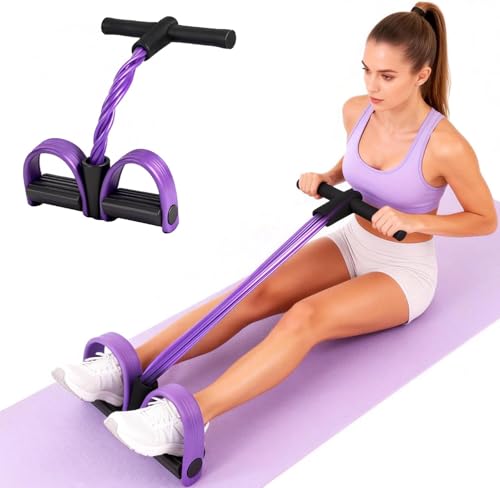
Multifunction Tension Rope, 6-Tube Elastic Yoga Pedal Puller Resistance Band, Natural Latex Tension Rope Fitness Equipment, for Abdomen/Waist/Arm/Leg Stretching Slimming Training (Purple)
👍【6 TUBES PEDAL RESISTANCE BAND】- FateFan 6 tube pedal fitness ropeis made of enviromental foam, and tube is…
As an affiliate, we earn on qualifying purchases.
As an affiliate, we earn on qualifying purchases.
Conclusion
Think of your posture as a tall, sturdy tree rooted in strength and balance. When you row with proper form, you’re the branch reaching confidently toward the sky, unbowed by sway or slack. Every stroke reinforces your foundation, helping you stand tall in everyday life. Keep this image in mind—your posture is your personal forest, vibrant and resilient, thriving with each mindful movement. Stay grounded, stay tall, and let your posture be your guiding branch.
Merach Rowing Machine, Magnetic Rower Machine for Home, 16 Levels of Quiet Resistance, Dual Slide Rail with Max 350lb Weight Capacity, App Compatible with LCD Monitor, Q1S
MERACH APP: Our App offers various courses and programmed exercises for you, Taking the courses can bring your…
As an affiliate, we earn on qualifying purchases.
As an affiliate, we earn on qualifying purchases.
Merach Rowing Machine, Magnetic Rower Machine for Home, 16 Levels of Quiet Resistance, Dual Slide Rail with Max 350lb Weight Capacity, App Compatible with LCD Monitor, Q1S
MERACH APP: Our App offers various courses and programmed exercises for you, Taking the courses can bring your…
As an affiliate, we earn on qualifying purchases.
As an affiliate, we earn on qualifying purchases.