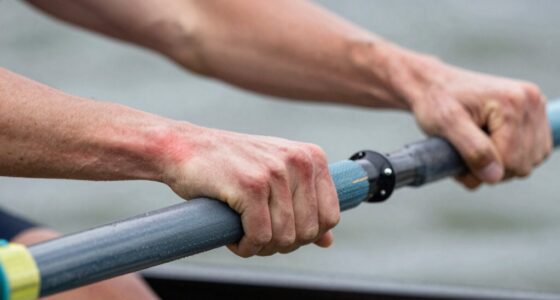
To power your rowing strokes without breaking form, focus on a smooth, coordinated sequence that drives from your legs, then hips, and finally your arms. Keep a strong catch, drive through with leg extension, and set a consistent rhythm while staying relaxed in your grip and shoulders. Proper technique combined with well-chosen equipment enhances force transfer and prevents injury. Mastering these elements guarantees you go hard while maintaining control; keep exploring to learn more.

Get workout gear delivered free with Prime
- Fast, free delivery on millions of items
- Prime Video, Amazon Music and more included
- Member-only deals all year
Key Takeaways
- Focus on coordinated, full-body movements, starting with a strong catch and driving through the legs, back, then arms.
- Maintain proper sequencing and timing to transfer power efficiently from legs to arms without rushing.
- Use well-designed equipment, like proper oar length and boat stability, to support consistent, powerful strokes.
- Keep your grip relaxed and shoulders down to prevent energy waste and avoid breaking form under pressure.
- Practice technique regularly to develop muscle memory, ensuring maximum power without compromising form.
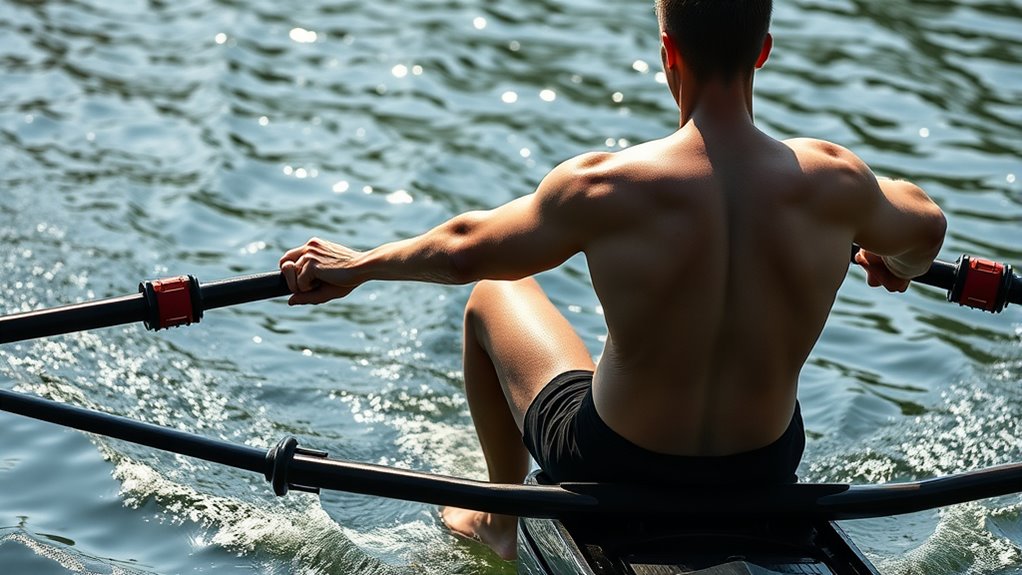
Have you ever wondered what makes a rowing stroke so powerful and efficient? The secret lies in mastering the right techniques and using the proper equipment. When you focus on these elements, you can generate maximum power without sacrificing form, guaranteeing every stroke counts.
First, let’s talk about techniques. A powerful stroke isn’t just about pulling hard; it’s about coordinated movements that maximize efficiency. You start with a strong catch, planting your blade firmly in the water as you swing your legs forward, engage your core, and lean back slightly. As you drive through the drive phase, you want to extend your legs first, then lean back with your torso, and finally pull the handle toward your chest. This sequence ensures a smooth transfer of power from your legs through your core and arms, reducing fatigue and preventing injury. Maintaining a consistent rhythm and avoiding rushing through the drive helps you sustain strength for longer periods. It’s also essential to stay relaxed in your grip and shoulders, so you don’t waste energy fighting unnecessary tension. Proper technique involves focusing on sequencing and timing—pull too early or too late, and you lose efficiency. Practice makes perfect, and even small adjustments can considerably improve your power output. Incorporating proper training techniques can further enhance your performance and prevent common mistakes.
Focus on sequencing and timing for maximum rowing efficiency and power.
Next, equipment plays an important role in executing powerful strokes. The right rowing boat, oars, and foot stretchers are essential to optimize your performance. A well-designed boat provides stability and minimizes drag, allowing you to transfer power smoothly into the water. Similarly, high-quality oars with appropriate length and blade shape facilitate better grip and leverage, making each pull more effective. Adjustable foot stretchers and sliding seats allow you to find your ideal position, enabling you to generate maximum force without overstressing your body. Investing in equipment that suits your size and strength will help you maintain proper technique longer and reduce fatigue. Remember, even the best technique can be compromised by poorly fitting equipment, so it’s worth taking time to select gear that fits well and enhances your natural movement.
Incorporating the right techniques and equipment into your rowing routine sets the foundation for powerful, efficient strokes. It’s about more than just pulling harder; it’s about pulling smarter. When you pay attention to details like your body position, timing, and the gear you use, you’ll notice improvements in your strength, endurance, and overall performance. Stay consistent with your practice, focus on maintaining good form, and choose equipment that supports your technique. With dedication, you’ll harness the full potential of your rowing power and take your skills to new heights.
rowing oars with adjustable length
As an affiliate, we earn on qualifying purchases.
As an affiliate, we earn on qualifying purchases.
Frequently Asked Questions
How Can I Tell if I’m Applying Maximum Power During a Stroke?
You can tell if you’re applying maximum power by paying attention to your stroke timing and muscle engagement. If your stroke feels smooth and coordinated, you’re likely maximizing power without losing form. You should feel strong muscle engagement in your legs, core, and back throughout the drive. A consistent, powerful finish indicates you’re pushing hard without overextending or rushing, helping you gauge if you’re exerting your maximum effort efficiently.
What Equipment Adjustments Help Improve Power Strokes?
To improve your power strokes, start with ergonomic seat adjustments to guarantee ideal posture and comfort, which allows for more effective power transfer. Focus on paddle grip techniques, holding the handle firmly but not too tight, to maximize leverage and control. Fine-tuning these equipment settings helps you generate more force without sacrificing form, leading to stronger, more efficient strokes each time you row.
How Does Breathing Affect the Power Stroke?
Good breath control enhances your power stroke by synchronizing your inhalation timing with your row. When you breathe steadily, you maintain a smooth rhythm, allowing you to generate more force without losing momentum. Proper inhalation timing ensures your muscles stay oxygenated, preventing fatigue and helping you stay consistent. Focus on controlled breathing patterns; this harmony between breath and stroke maximizes your strength and keeps your form intact, making every pull more effective.
Can Technique Modifications Increase Power Without Extra Effort?
Yes, technique modifications can boost your power without extra effort. Focus on technique drills to refine your stroke, ensuring you’re engaging the right muscles efficiently. Incorporate strength training to build muscle, making each stroke more powerful. By improving your form and strength, you maximize output with less strain, allowing you to go harder during each power stroke without risking injury or sacrificing efficiency.
How Do Different Water Conditions Impact Power Stroke Effectiveness?
Different water conditions markedly impact your power stroke effectiveness. Increased water resistance from choppier or rough water requires you to apply more force, making it harder to maintain your rhythm. Additionally, boat stability decreases on unstable water, causing your strokes to become less efficient. To adapt, focus on smooth, controlled movements, and adjust your power to counteract water resistance, ensuring you maintain proper technique and maximize your effort regardless of water conditions.
As an affiliate, we earn on qualifying purchases.
Conclusion
Remember, quality over quantity is key. Focus on maintaining proper form during each power stroke, even when going all out. Pushing yourself is important, but not at the expense of technique. As the saying goes, “Slow and steady wins the race.” Keep your strokes controlled and powerful, and you’ll see better results without risking injury or burnout. Stay consistent, and your rowing will improve faster than you think.
rowing boat with stability features
As an affiliate, we earn on qualifying purchases.
As an affiliate, we earn on qualifying purchases.
As an affiliate, we earn on qualifying purchases.
Halloween Picks
halloween
As an affiliate, we earn on qualifying purchases.