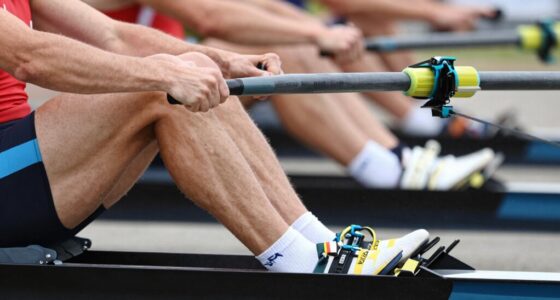
To go hard during rowing sprint intervals without losing form, focus on maintaining core stability, engaging your legs, and keeping your back straight. Drive explosively with your legs, then smoothly transfer power through your arms and back. Pay attention to your breathing, using rhythmic inhales and exhales that support your effort. Recovery is key—use it to reset your posture and reinforce good habits. Keep refining technique during each interval, and you’ll maximize power without sacrificing form as fatigue sets in. If you want to optimize your performance, keep going.
Key Takeaways
- Focus on explosive leg drives and smooth arm pulls to maintain power without sacrificing form.
- Keep your back straight and engage core muscles throughout each stroke to prevent fatigue.
- Incorporate rhythmic breathing to support oxygen flow and sustain high intensity with proper technique.
- During rest periods, reset your posture and reinforce proper form to prepare for the next interval.
- Prioritize technique over speed, gradually increasing intensity while maintaining control and efficient movement.

Have you ever wondered how to boost your rowing performance and increase your endurance in less time? If so, mastering rowing sprint intervals can be a game-changer. To maximize benefits and prevent injury, it’s essential to focus on techniques optimization during your high-intensity efforts. Sprint intervals push your cardiovascular system and muscular endurance, but only if you maintain proper form throughout. When you’re going all-out, it’s tempting to sacrifice technique for speed, yet that can lead to poor posture, inefficient strokes, and eventual fatigue. Instead, prioritize technique optimization by engaging your core, keeping your back straight, and driving powerfully with your legs. This approach ensures that every stroke is effective and reduces unnecessary strain.
As you start each interval, set clear goals for your intensity. Remember, the key isn’t just to go fast but to do so while maintaining control. Focus on explosive leg drives, followed by a smooth pull with your arms, and a controlled recovery. This sequence helps you optimize your energy transfer and keeps your form intact even during those rapid sprints. Keep your grip relaxed and avoid overextending your arms, which can cause fatigue and diminish the power of your stroke. By consciously refining your technique during each interval, you’ll find it easier to sustain high speeds without losing form as fatigue sets in. Additionally, paying attention to techniques optimization can help you develop a more efficient and injury-resistant rowing style.
Incorporate breathing techniques into your intervals as well. Proper breathing maximizes oxygen intake, helping you maintain intensity longer. Inhale deeply through your nose during the recovery phase, and exhale forcefully during the drive. This rhythmic breathing supports your efforts and keeps your core engaged, which is crucial when you’re pushing hard. Additionally, pay attention to your stroke rate; a higher cadence isn’t always better if your form suffers. Aim for a balance between speed and technique, seeking a smooth rhythm that you can sustain through multiple intervals.
Finally, after each sprint, take a brief recovery period to allow your muscles to recover and your heart rate to stabilize. During these rests, focus on resetting your form—straightening your posture, engaging your core, and preparing mentally for the next burst. Over time, as you refine your techniques and optimize your approach to sprint intervals, you’ll notice improvements in both your power and stamina. Remember, consistency and attention to detail during your training are what make the difference. By emphasizing techniques optimization, you’ll develop the ability to go hard without compromising your form, leading to more effective workouts and better overall performance on the water or the ergometer.
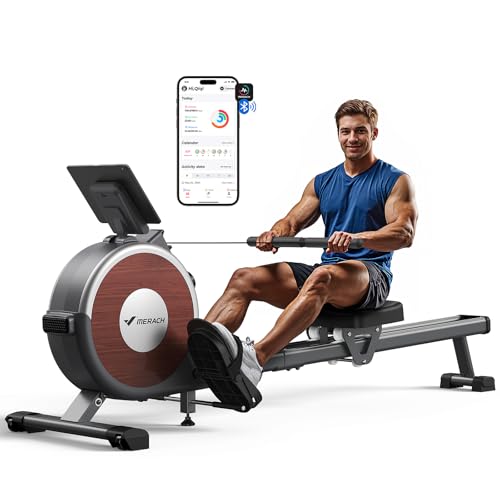
Merach Rowing Machine, Magnetic Rower Machine for Home, 16 Levels of Quiet Resistance, Dual Slide Rail with Max 350lb Weight Capacity, App Compatible with LCD Monitor, Q1S
MERACH APP: Our App offers various courses and programmed exercises for you, Taking the courses can bring your…
As an affiliate, we earn on qualifying purchases.
As an affiliate, we earn on qualifying purchases.
Frequently Asked Questions
How Do I Prevent Fatigue From Affecting My Form During Sprints?
To prevent fatigue from affecting your form during sprints, focus on proper breathing techniques to maintain oxygen flow and reduce muscle strain. Engage your core for stabilization, ensuring your body stays aligned and efficient even when tired. Pace yourself with controlled efforts, and incorporate regular strength training to build endurance. By combining these strategies, you’ll sustain good form and perform at your best throughout intense rowing intervals.
What Are the Best Recovery Techniques After Intense Rowing Intervals?
Some might think resting is enough, but effective recovery also requires good nutrition strategies and mental recovery. After intense rowing intervals, you should refuel with protein and carbs to repair muscles and replenish energy. Hydrate well and take time for mental relaxation to reduce stress and improve focus. Stretching and gentle movement aid physical recovery, helping you bounce back stronger. Prioritizing both nutrition and mental recovery ensures ideal performance and prevents burnout.
How Can I Adjust Interval Intensity for Beginners?
To adjust interval intensity for beginners, focus on techniques for pacing control, like starting with lower resistance and maintaining steady strokes. Use suitable warm-up routines to prepare your muscles, reducing the risk of losing form. Gradually increase effort as confidence and endurance build. Listen to your body, and don’t push too hard too fast. This approach helps you stay controlled, improve technique, and enjoy effective workouts without risking injury.
What Equipment Improvements Can Enhance My Sprint Performance?
To boost your sprint performance, focus on equipment improvements like ergonomic seating and an adjustable footplate. Ergonomic seating ensures comfort and proper posture, helping you maintain form during intense sprints. An adjustable footplate allows you to customize your setup for peak power transfer and stability. These enhancements help you stay focused, reduce fatigue, and maximize your effort, ultimately leading to faster, more efficient sprints without sacrificing technique.
How Do I Monitor Progress and Avoid Plateaus in Sprint Training?
To monitor progress and avoid plateaus, focus on training metrics like split times, stroke rate, and power output. Track your progress regularly to see improvements and identify stagnation early. Use apps or a training journal for consistent progress tracking. Adjust your workouts based on these metrics, increasing intensity or changing intervals to challenge your body, ensuring continuous growth and preventing plateaus in your sprint training.

YSSOA Rowing Machine Rower Ergometer, with 12 Levels of Adjustable Resistance, Digital Monitor and 260 lbs of Maximum Load Black
[12 levels of resistance]: The resistance system of the household folding rower has 12 levels of resistance, and…
As an affiliate, we earn on qualifying purchases.
As an affiliate, we earn on qualifying purchases.
Conclusion
Remember, maintaining proper form during rowing sprint intervals maximizes your performance and reduces injury risk. Pushing yourself hard is essential, but not at the expense of technique. Are you willing to sacrifice your progress by ignoring proper form? Stay focused, listen to your body, and keep your technique sharp, even when going all out. With consistency and mindful effort, you’ll see improvements without compromising your health or form. Keep rowing smart and sprint strong!
rowing stroke technique training aid
As an affiliate, we earn on qualifying purchases.
As an affiliate, we earn on qualifying purchases.

Trideer Exercise Ball for Yoga, Pilates & Fitness – Stability Ball Equipment for Home Gym & Office Chair, Core & Balance Training Accessories, Physical Therapy Equipment, Quick Pump Included, 5 Sizes
Designed with anti-slip stripes and a fine frosted texture for enhanced grip and stability. The increased surface friction…
As an affiliate, we earn on qualifying purchases.
As an affiliate, we earn on qualifying purchases.