

To build a weekly rowing habit without overdoing your legs, start slow and gradually increase your intensity and duration. Focus on proper technique to minimize strain, keeping your back straight and engaging your core. Incorporate warm-ups, cool-downs, and stretching to prevent soreness. Rest days are essential for recovery, so listen to your body. Maintaining good nutrition and hydration supports progress. Keep these tips in mind and discover more ways to stay injury-free and consistent.
Open a free Amazon Business account
Business pricing, bulk buying and tax-exempt orders.
As an affiliate, we earn on qualifying purchases.
Key Takeaways
- Gradually increase rowing duration and intensity to prevent overexertion and allow muscle adaptation.
- Incorporate proper warm-up, cool-down, and stretching to reduce leg strain and improve flexibility.
- Focus on correct technique, engaging legs properly to avoid unnecessary fatigue and injury.
- Schedule rest or low-impact cross-training days to facilitate recovery and prevent overuse.
- Maintain a balanced diet and hydration to support muscle recovery and sustain energy levels.
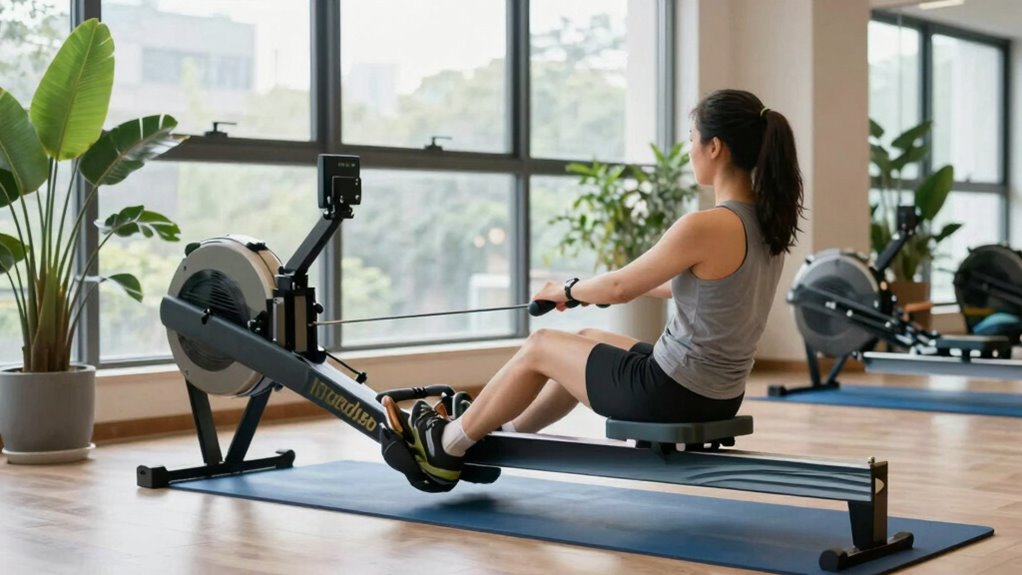
Starting a weekly rowing routine can be a great way to boost your fitness, but if you’re not careful, it can also leave your legs feeling exhausted and sore. To build a sustainable habit, you need to balance your workouts with proper diet planning and injury prevention strategies. Your diet plays an essential role in recovery and energy levels. Focus on including a mix of lean proteins, healthy fats, and carbohydrates to fuel your workouts and repair muscles afterward. Hydration is equally important, so drink plenty of water throughout the day, especially before and after rowing sessions.
Balance your rowing routine with proper diet, hydration, and recovery for sustainable progress and muscle health.
When you plan your meals, aim for nutrient-dense foods that support muscle repair and reduce inflammation, such as berries, leafy greens, and nuts. Avoid processed foods and excessive sugar, which can hinder recovery and leave you feeling sluggish. Proper diet planning guarantees your body gets the right vitamins and minerals needed to prevent fatigue and injury, keeping you motivated to stick with your weekly routine. Incorporating proper technique during your rowing sessions can significantly reduce the risk of strain and injury, ensuring your legs stay healthy and strong. Additionally, understanding ergonomic positioning can help maximize efficiency and reduce the likelihood of post-session soreness.
Injury prevention is essential if you want to avoid setbacks and keep your legs healthy. Start slow and gradually increase the intensity and duration of your rowing sessions. This approach helps your muscles, tendons, and joints adapt without overloading them. Paying attention to muscle engagement can help you optimize your technique and avoid unnecessary strain. Keep your back straight, engage your core, and use your legs effectively during each stroke. Poor technique can lead to strain and injuries, especially in your knees and lower back. Incorporating proper equipment like cushioned seats or supportive footwear can also make a difference in reducing discomfort and preventing injuries. Remember that body awareness is key to maintaining good form and avoiding overuse injuries.
Incorporate warm-up and cool-down periods into your routine. Gentle stretches and light rowing at the beginning prepare your muscles for exercise, reducing the risk of strains. After rowing, stretch your legs, hips, and lower back to enhance flexibility and promote recovery. Listening to your body is essential—if you experience persistent soreness or pain, take a break or consult a professional to prevent aggravating minor issues into more serious injuries.
Finally, give your legs time to recover between sessions. Rest days are essential for muscle repair and avoiding overtraining. Cross-training with low-impact activities like swimming or cycling can prevent your legs from becoming too fatigued, while still creating a balanced fitness routine. By combining smart diet planning, proper injury prevention, and listening to your body, you can develop a consistent weekly rowing habit without frying your legs. This way, you’ll enjoy the benefits of rowing while keeping your muscles healthy and ready for each new session.
ergonomic rowing machine seat cushion
As an affiliate, we earn on qualifying purchases.
As an affiliate, we earn on qualifying purchases.
Frequently Asked Questions
What Is the Ideal Duration for Each Rowing Session?
Each rowing session should last around 20 to 30 minutes for beginners, ensuring you maintain proper rowing technique and avoid injury. Focus on steady, controlled strokes and take breaks if needed. As you progress, gradually increase your duration. Remember to check your equipment maintenance regularly to keep your rowing machine in top shape, which helps you stay consistent and safe during your workouts.
How Can I Stay Motivated to Maintain Consistency?
To stay motivated, focus on mindset strategies that emphasize your progress and goals. Visualize how rowing benefits your health and well-being, keeping you committed. Additionally, find accountability partners who share your routine; they’ll motivate you to stay consistent and push through challenges. Celebrate small victories along the way, and remind yourself why you started. These habits reinforce your dedication and make maintaining a weekly rowing routine rewarding and sustainable.
Should I Incorporate Rest Days Into My Schedule?
Think of your muscles as a garden that needs rest to flourish. Incorporating rest days is essential for proper recovery and avoiding burnout. Rest day importance can’t be overstated—they let your body repair and strengthen. Use recovery strategies like stretching, hydration, and gentle movements on rest days. This approach keeps your rowing habit sustainable and prevents injury, ensuring you stay motivated and consistent in the long run.
What Should I Eat Before and After Rowing?
You should eat a light, carbohydrate-rich snack about 30-60 minutes before rowing for energy, and focus on protein afterward to support muscle recovery. Nutrition timing is key—fuel up properly before your workout and replenish with a balanced meal post-exercise. This approach helps you maintain energy levels during your session and optimizes muscle recovery, ensuring you stay consistent without risking fatigue or injury.
How Do I Prevent Upper Body Fatigue During Rowing?
Want to dodge upper body fatigue during rowing? Boost your upper body strength with targeted exercises and stretch thoroughly beforehand. Focus on fatigue management by pacing yourself, engaging your core, and using proper form. Don’t just whack those oars like you’re auditioning for a rowing competition—listen to your body and give muscles time to recover. Remember, a strong upper body isn’t built in a day, but it’s ruined in one bad stroke!
As an affiliate, we earn on qualifying purchases.
Conclusion
Building a weekly rowing habit without overdoing your legs might seem tricky, but it’s all about balance and listening to your body. Remember, sometimes the best workouts happen when you least expect it—like a surprise rain shower that cools the air after a summer hike. So, stay consistent, adjust your intensity, and enjoy the journey. Before you know it, rowing will become your favorite way to stay fit—and you’ll wonder how you ever skipped it!
As an affiliate, we earn on qualifying purchases.
adjustable rowing machine with low impact
As an affiliate, we earn on qualifying purchases.
As an affiliate, we earn on qualifying purchases.
Flea & tick season Picks
flea and tick prevention
As an affiliate, we earn on qualifying purchases.