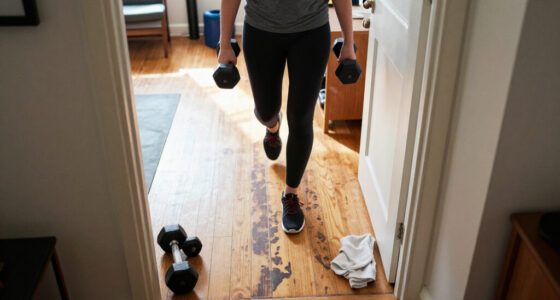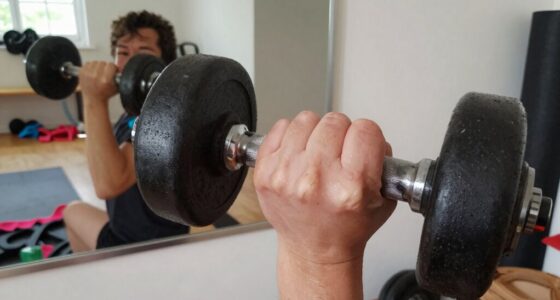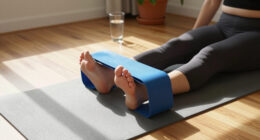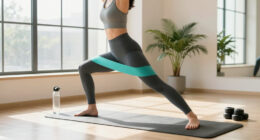
When your adjustable weights top out too soon, focus on changing your training approach. Increase workout frequency, add more reps, or include supersets and circuit training to boost intensity. Improve your form, slow down movements, or pause at peak contraction to engage muscles more. Varying techniques like drop sets or pyramid reps can also prevent plateaus. Stay consistent and explore these strategies to keep progressing—more effective tips await if you keep exploring.

Get workout gear delivered free — and shop member deals
- Fast, free delivery on millions of items
- Access to Prime Big Deal Days deals on October 6–7
- Prime Video, Amazon Music and more included
Key Takeaways
- Increase workout frequency and volume with more sets, reps, or shorter rest periods to challenge muscles without heavier weights.
- Incorporate tempo, pauses, or slow movements to increase tension and engagement during lifts.
- Use advanced techniques like supersets, circuits, pyramid sets, or drop sets to intensify workouts.
- Focus on proper nutrition and recovery to support muscle growth and adapt to higher training demands.
- Vary training intensity and methods regularly to prevent plateaus and continue progressing beyond weight limits.
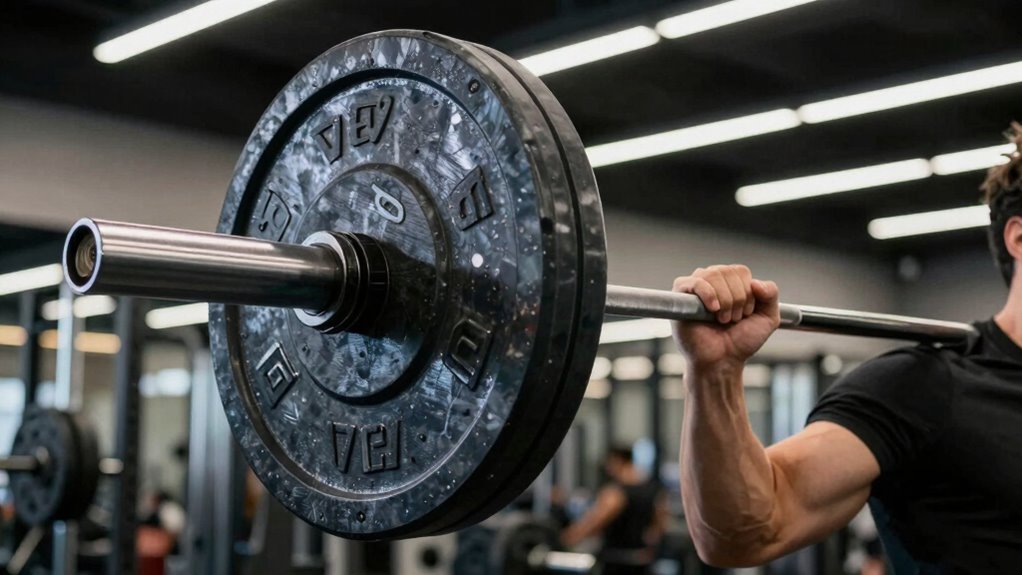
If your adjustable weights hit their maximum and you’re still not feeling challenged enough, it’s a clear sign it’s time to find new ways to progress. Relying solely on heavier weights isn’t always the answer, especially when you’ve already reached your equipment’s limit. Instead, consider adjusting your workout approach by incorporating different training techniques. For example, increasing your workout frequency can help you build strength and endurance without needing heavier weights. Training more often, but with proper rest and recovery, allows you to stimulate your muscles in new ways, preventing plateaus.
When weights max out, vary your training frequency and techniques to keep progressing and avoid plateaus.
Another effective strategy is to focus on improving your form, tempo, and repetitions. Slowing down the movement or pausing at the peak contraction increases time under tension, making your muscles work harder even with lighter weights. You can also add more reps or sets to your routine, which boosts overall volume and challenges your muscles differently. If you’re comfortable with these modifications, supersets or circuit training can intensify your workouts further, maximizing effort without the need for heavier weights.
Nutrition tips also play a vital role in progressing your strength and muscle growth. Ensuring you’re consuming enough protein supports muscle repair and growth, especially when you’re increasing workout intensity or volume. Stay hydrated and eat a balanced diet rich in whole foods, healthy fats, and complex carbs to fuel your workouts and recovery. Proper nutrition helps your muscles adapt and grow stronger, making lighter weights feel more effective over time. Incorporating progressive overload techniques beyond simply increasing weight can help you continue to develop strength.
Additionally, understanding the importance of training volume and how it influences muscle adaptation can help you design more effective routines. While it might seem tempting to stick with the same routine, changing your workout frequency can yield significant gains. If you’re typically training three times a week, try adding an extra session or spreading your workouts into more frequent, shorter sessions. This approach keeps your muscles under stimulation more consistently, encouraging growth even if your weights can’t go higher. Incorporating muscle fatigue strategies, such as high-rep sets or extended time under tension, can also push your muscles further. Just keep in mind the importance of rest days to prevent overtraining and injury.
Exploring different training intensity variations, such as pyramid sets or drop sets, can also provide new challenges for your muscles. It’s also helpful to incorporate recovery strategies, like stretching and foam rolling, to optimize muscle repair and prevent injuries. Ultimately, progressing with adjustable weights doesn’t only mean lifting heavier; it involves a combination of training techniques, recovery, and nutrition. By tweaking your workout frequency, focusing on tempo, volume, and form, and supporting your efforts with proper nutrition, you can continue to challenge your muscles effectively. Remember, growth often comes from consistency and smart programming rather than just increasing weight. So, adapt your routine, stay patient, and keep pushing your limits in new ways.
adjustable dumbbells with high max weight
As an affiliate, we earn on qualifying purchases.
As an affiliate, we earn on qualifying purchases.
Frequently Asked Questions
Can I Combine Multiple Adjustable Weights for More Resistance?
Yes, you can combine multiple adjustable weights for more resistance. You might consider weight stacking, where you add extra plates or weights to increase intensity. Additionally, resistance bands are great for supplementing your workout, providing extra resistance without needing heavier weights. Using both methods together allows you to customize your resistance levels exactly, helping you progress even when your adjustable weights reach their limit.
How Often Should I Increase Weights for Optimal Progress?
Like a river carving its path, you should increase weights gradually—every 1-2 weeks—based on your progression strategies. Listen to your body, and if you hit a plateau, focus on recovery before pushing further. Consistent small increases help avoid stagnation and promote steady growth. Remember, patience is key; challenging yourself just enough guarantees continuous progress without risking injury or burnout.
Are There Specific Exercises Better Suited for High Resistance?
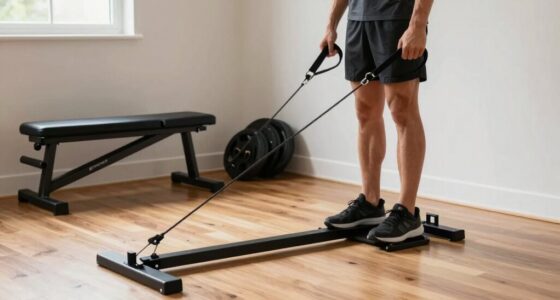
Yes, exercises with variable resistance, like resistance bands or cable machines, are better suited for high resistance. They allow you to maintain progressive overload by adjusting tension, ensuring continuous muscle challenge even when your adjustable weights top out. These exercises enable you to push your limits safely, helping you progress without needing heavier weights. Incorporating variable resistance into your routine keeps training effective and prevents plateaus.
What Are Signs I’Ve Hit a Plateau in My Training?
You’ve hit a plateau when your progress stalls despite consistent effort. Signs include no strength gains, unchanged reps or weight, and decreased motivation. To break through, track your progress closely and introduce workout variation—swap exercises, increase intensity, or adjust rest periods. These strategies challenge your muscles differently, helping you push past stagnation and continue making gains. Keep monitoring your progress and stay adaptable to stay on track.
Should I Switch to Different Equipment When Weights Top Out?
Imagine your current weights as a sturdy bridge, but when they top out, it’s like hitting a dead end. You should switch to different equipment that offers better durability and more weight versatility. This way, you can keep pushing forward without feeling stuck. Upgrading guarantees your gear matches your growing strength, giving you the freedom to challenge yourself and break through plateaus effortlessly.
resistance bands for strength training
As an affiliate, we earn on qualifying purchases.
As an affiliate, we earn on qualifying purchases.
Conclusion
When your adjustable weights top out too soon, get creative with your workouts. For example, if you’re limited to 50 pounds and want to keep progressing, try adding more reps, slowing down your movements, or incorporating unilateral exercises to increase intensity. Imagine Sarah, who hit her plate at 50 pounds but kept advancing by focusing on higher reps and slow eccentrics. With these tweaks, you’ll keep challenging your muscles and pushing past your limits.
adjustable weight plates for home gym
As an affiliate, we earn on qualifying purchases.
As an affiliate, we earn on qualifying purchases.
muscle tension training equipment
As an affiliate, we earn on qualifying purchases.
As an affiliate, we earn on qualifying purchases.
Halloween Picks
halloween
As an affiliate, we earn on qualifying purchases.