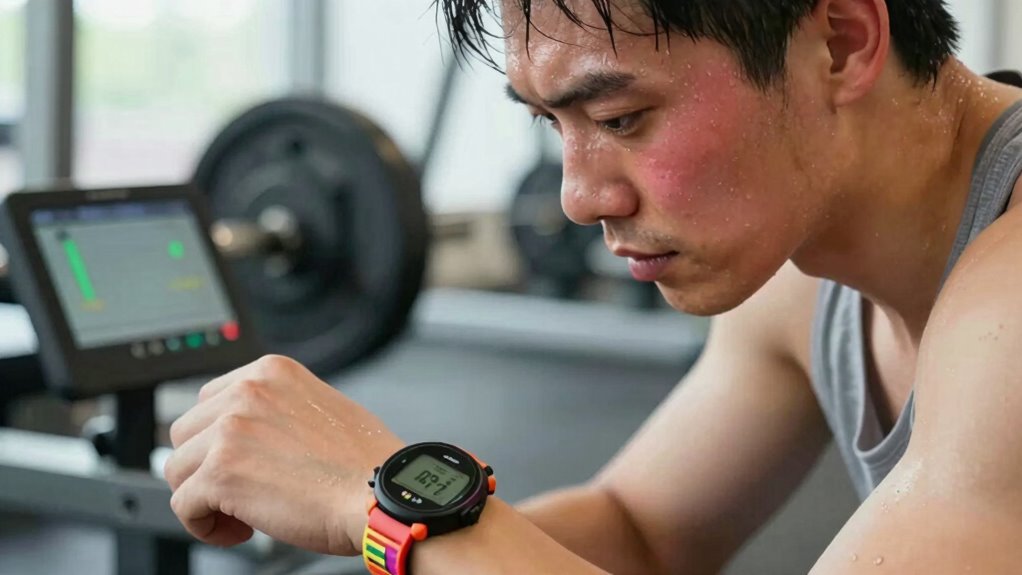

You can easily use RPE without a sports science background by tuning into your body’s signals during exercise. Focus on how your muscles feel, your breathing, and your overall effort to gauge intensity—there’s no need for gadgets. Regularly check in with yourself to adjust effort based on how tired or fresh you feel. With practice, you’ll quickly learn to trust your body’s cues, and if you keep exploring, you’ll find even more ways to improve your effort regulation.

Get workout gear delivered free with Prime
- Fast, free delivery on millions of items
- Prime Video, Amazon Music and more included
- Member-only deals all year
Key Takeaways
- Focus on your body’s sensations like breathing, muscle fatigue, and effort level instead of technical jargon.
- Use simple descriptions (e.g., easy, moderate, hard) to gauge effort, then translate to RPE scale.
- Regularly check in during workouts to stay aware of how hard you’re working.
- Adjust effort based on how you feel that day, trusting your internal cues.
- Practice consistently to become more intuitive and confident in estimating your effort without technical tools.
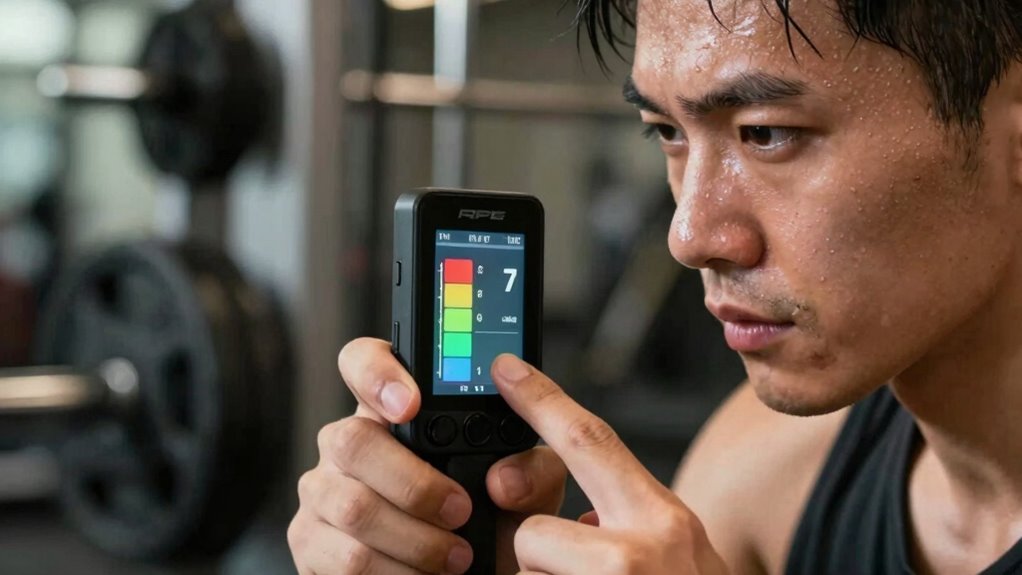
Ever wondered how to gauge your workout intensity accurately? If you’re tired of second-guessing whether you’re pushing yourself too hard or not enough, using the Rate of Perceived Exertion (RPE) scale can be a game-changer. RPE is a simple tool that helps you measure your training intensity based on how hard you feel you’re working, rather than relying on gadgets or complex metrics. This approach makes it easy to stay in control of your workouts and manage fatigue effectively.
When you focus on training intensity with RPE, you’re tuning into your body’s signals. Instead of obsessing over numbers or heart rate zones, you rate your effort on a scale, typically from 1 to 10. A 1 might be very light activity, like walking slowly, while a 10 is maximum effort—like sprinting all-out. This simple scale empowers you to adjust your effort in real-time, ensuring you’re neither overexerting nor underchallenging yourself. It makes fatigue management straightforward because you learn to recognize your limits and avoid pushing into overtraining territory.
Using RPE doesn’t require fancy equipment or in-depth scientific knowledge. You just need to pay attention to how your body feels during exercise. As you progress through a workout, check in with yourself periodically. Are you breathing heavily but still able to maintain form? Are your muscles feeling tired but not completely exhausted? These sensations help you assign an RPE score. Over time, you’ll develop a better understanding of your body’s responses, making it easier to stay consistent and avoid burnout. Body awareness is a crucial skill that enhances your ability to self-regulate effectively. Additionally, understanding training principles can help you connect your perceived effort to effective workout strategies. Developing a sense of internal cues can further improve your ability to gauge effort accurately without external devices.
One of the biggest advantages is that RPE keeps your workouts flexible. If you’re feeling fresh, you might rate an effort as a 7, pushing a little harder. If you’re fatigued, dial it back to a 4 or 5. This adaptability helps you train smarter and prevents injury. Plus, it encourages listening to your body instead of blindly following preset numbers or routines. When fatigue creeps in, you can consciously reduce effort, ensuring you recover properly and stay motivated.
Incorporating RPE into your routine also means you don’t have to guess whether you’re doing enough. It’s a practical way to monitor progress without overcomplicating things. Over time, you’ll gain confidence in your ability to self-regulate, making your training sessions more effective and sustainable. With a little practice, you’ll start recognizing the subtle cues your body gives, allowing you to optimize training intensity and keep fatigue at manageable levels. This balance is key—so you can train consistently, enjoy your workouts, and see steady progress without feeling overwhelmed or exhausted. Developing a good understanding of your body’s signals is essential for long-term success.
As an affiliate, we earn on qualifying purchases.
Frequently Asked Questions
Can RPE Be Used for Beginners or Only Experienced Athletes?
Yes, RPE works well for beginners and experienced athletes alike. As a beginner, you can use RPE to monitor your training adaptation and prevent overtraining by paying attention to how hard exercises feel. It helps with fatigue management, ensuring you don’t push too hard too soon. With practice, you’ll develop a better sense of effort, making RPE a valuable tool regardless of your experience level.
How Often Should I Reassess My RPE During Training?
You should reassess your RPE regularly, ideally every few weeks, to stay on top of your training consistency and fatigue management. Pay attention to how your body feels during sessions and adjust your RPE accordingly. If you notice increased fatigue or decreased performance, re-evaluate your perceived effort. Regular check-ins help guarantee you’re training effectively without overtraining, keeping progress steady and injuries at bay.
Is RPE Suitable for All Types of Exercises?
RPE works well for many exercises, but it’s not a one-size-fits-all solution. You can use it to gauge exercise intensity across strength training, cardio, and even flexibility work, making it a flexible tool for training customization. Just keep in mind that some activities, like skill-based sports or high-precision movements, might need additional cues. It’s a good starting point, but listen to your body for the best results.
What Are Common Mistakes When Using RPE?
A common mistake when using RPE is ignoring your body’s signals, leading to inconsistent intensity and poor fatigue management. You might push too hard or hold back, disrupting your progress. To avoid this, stay honest about your effort level and track it consistently. This helps you better gauge your fatigue and maintain appropriate intensity, ensuring safe, effective workouts and preventing burnout or injury.
How Does RPE Compare to Percentage-Based Training Methods?
If you think percentage-based training is more precise, RPE actually offers better training accuracy because it gauges your effort perception in real-time. Unlike rigid percentages, RPE adapts to daily fluctuations in strength and fatigue, making your workouts more responsive and personalized. This way, you focus on how hard you feel you’re working, not just a fixed number, which can lead to more effective progress and fewer overtraining risks.
As an affiliate, we earn on qualifying purchases.
Conclusion
So, now you’re armed with the simple secrets to using RPE without feeling overwhelmed. Remember, it’s like having a personal coach in your pocket—guiding you through every rep with ease. Trust your instincts, listen to your body, and don’t overthink it. Before long, RPE will feel as natural as breathing, turning your workouts into a smooth, unstoppable force. Get ready to crush your goals—because nothing can stand in your way now!
fitness tracking without gadgets
As an affiliate, we earn on qualifying purchases.
As an affiliate, we earn on qualifying purchases.
perceived exertion training tools
As an affiliate, we earn on qualifying purchases.
As an affiliate, we earn on qualifying purchases.
Halloween Picks
halloween
As an affiliate, we earn on qualifying purchases.