To increase your treadmill distance without soreness or shin pain, focus on gradual progression—no more than 10% weekly—as your body adapts. Maintain proper form by engaging your core and landing softly, and always wear supportive shoes on softer surfaces. Track your heart rate to stay in the aerobic zone, and incorporate strength exercises for your calves and hips to boost resilience. Consistent recovery and attentive listening to your body help prevent injury. Keep going to discover more effective strategies.
Key Takeaways
- Gradually increase treadmill distance by no more than 10% weekly to allow your body to adapt safely.
- Maintain proper running form, landing softly and engaging your core to reduce impact on shins and knees.
- Use supportive footwear and softer running surfaces to minimize shock and strain during runs.
- Incorporate strength exercises for calves, shins, and hips to build resilience and prevent soreness.
- Monitor heart rate to stay within aerobic zones, avoiding overexertion and reducing injury risk.
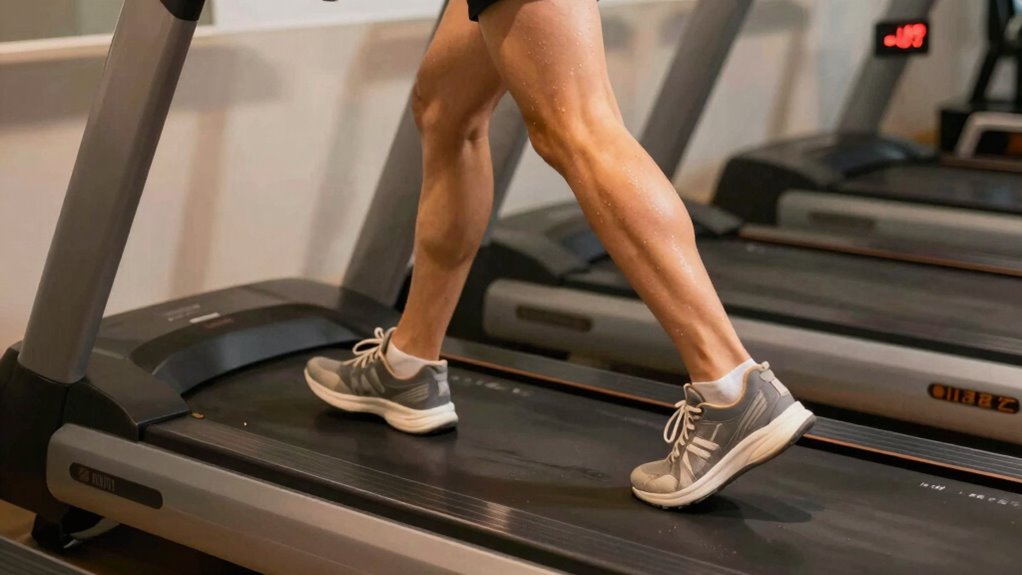
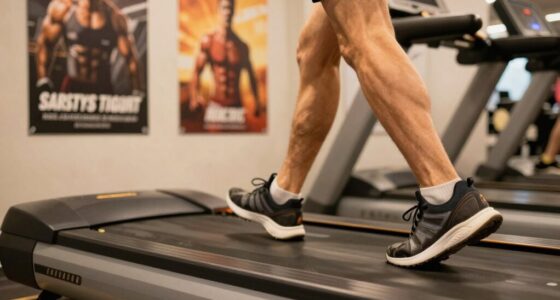
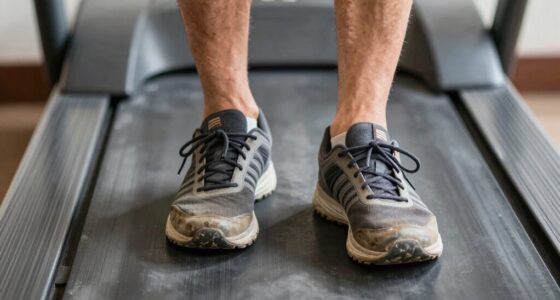
Wondering how to push your treadmill workouts further? Increasing your distance without experiencing sudden soreness or shin pain is all about smart adjustments and mindful techniques. First, pay close attention to your running form. When you run with proper form, you reduce unnecessary strain on your shins and knees, making it easier to go longer without discomfort. Keep your posture upright, engage your core, and land softly on the balls of your feet rather than striking heavily with your heels. A good running form promotes efficient movement, helping you conserve energy and avoid overuse injuries. It also minimizes impact forces that can lead to shin pain, especially as you gradually increase your distance. Additionally, maintaining proper running technique can significantly decrease the risk of injury and improve your endurance. Incorporating running biomechanics principles can further enhance your form and reduce injury risk over time. Regularly reviewing and adjusting your technique based on feedback can also help prevent overuse injuries and improve overall running efficiency. Paying attention to running surface is also important, as softer surfaces can reduce impact and strain on your shins and joints. Using appropriate footwear can also play a vital role in cushioning your feet and preventing injuries during longer runs.
In addition, incorporating heart rate monitoring into your workout is a game-changer. By tracking your heart rate, you can ensure you’re exercising within your ideal aerobic zone, which supports endurance building without overtaxing your body. Staying in this zone allows you to extend your treadmill sessions comfortably, avoiding the fatigue that leads to soreness. Use a heart rate monitor or fitness tracker to keep tabs on your pulse, and aim for about 60-75% of your maximum heart rate during your workouts. This approach helps you push your distance gradually while reducing the risk of sudden soreness and shin pain caused by overexertion.
Progression is key. Instead of making huge jumps in your treadmill distance, increase it slowly, adding no more than 10% per week. This gradual build-up gives your muscles, tendons, and bones time to adapt, decreasing the likelihood of soreness and injuries. Incorporate regular walking intervals or slow jogging into your routines, so your body adjusts gradually to increased workload. Also, pay attention to your body’s signals. If you start feeling pain or excessive fatigue, scale back slightly and give yourself time to recover. Consistent muscle strengthening exercises can also help build resilience and prevent injury as you increase your distance.
Strengthening exercises can complement your treadmill workouts, especially focusing on your calves, shins, and hips. Stronger muscles support your joints and absorb impact more effectively, helping you run longer distances comfortably. Finally, ensure you’re well-hydrated, wear supportive shoes, and consider cross-training on different days to prevent overuse injuries. By adopting these strategies—focusing on correct running form, monitoring your heart rate, progressing gradually, and strengthening your muscles—you’ll find it easier to increase your treadmill distance without the pain or soreness that often discourages progress.

Joomra Whitin Men's Running Shoes Size 8 Red Athletic Sneakers
Slightly structured engineered knit upper
As an affiliate, we earn on qualifying purchases.
As an affiliate, we earn on qualifying purchases.
Frequently Asked Questions
How Often Should I Increase My Treadmill Distance?
You should increase your treadmill distance gradually, about once every one to two weeks. Focus on progressive overload to avoid injury, gradually adding distance as your body adapts. Maintaining training consistency is key, so don’t rush the process. Listen to your body and avoid sudden jumps that could cause soreness or shin pain. By balancing these elements, you’ll safely boost your endurance and improve your performance over time.
Can Proper Footwear Prevent Shin Pain?
Yes, proper footwear can help prevent shin pain. Look for shoes with good shoe cushioning to absorb impact, reducing stress on your shins. Choose shoes that match your foot strike—whether you land on your heel, midfoot, or forefoot—to promote natural movement and lessen discomfort. Well-fitted, supportive shoes can make a significant difference in avoiding shin pain and improving your treadmill running experience.
Should I Include Rest Days in My Training?
Yes, including rest days in your training is essential. Studies show that athletes who incorporate rest days reduce injury risk by 40%. Rest day strategies like active recovery, stretching, and hydration help prevent soreness and shin pain. To boost your treadmill distance safely, listen to your body, follow injury prevention tips, and schedule regular rest days. This approach guarantees consistent progress without overtraining or discomfort.
How Does Hydration Affect Running Endurance?
Maintaining proper hydration levels directly impacts your running endurance by preventing dehydration and fatigue. When you stay well-hydrated, your body best manages electrolytes balance, which supports muscle function and reduces cramping. Drinking water consistently and replenishing electrolytes during longer runs keeps your energy steady, allowing you to run further without feeling drained or experiencing soreness. Proper hydration is essential for sustained performance and overall comfort during your treadmill workouts.
Are Stretching Routines Necessary Before Treadmill Workouts?
Think of your muscles as a finely tuned instrument; proper tuning requires stretching. While static stretching isn’t necessary before treadmill workouts, dynamic stretching warms up your muscles effectively. Incorporate dynamic stretches like leg swings and arm circles, and use foam rolling to loosen tight areas. These routines prepare your body, reduce injury risk, and improve performance, making your treadmill sessions smoother and more comfortable.
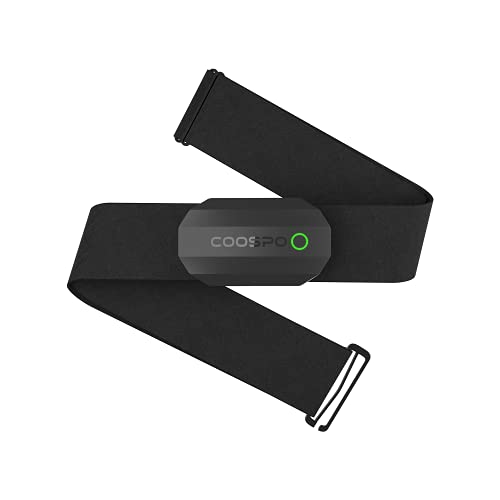
COOSPO Bluetooth Heart Rate Monitor Chest Strap H808S, ANT+ BLE HR Monitor Chest, HRM IP67 Waterproof, Use for Running Cycling Gym and Other Sports
±1BPM Accurate Heart Rate Monitor – The CooSpo HR sensor H808S can monitor high-performance real-time heart rate data…
As an affiliate, we earn on qualifying purchases.
As an affiliate, we earn on qualifying purchases.
Conclusion
As you lace up again tomorrow, imagine yourself gliding smoothly down a winding trail, each step feeling lighter and more effortless. Your muscles will thank you for the gradual progress, avoiding the sting of soreness or shin pain. With patience and consistent effort, you’ll soon find yourself covering more ground, the rhythm of your stride growing stronger. Keep pushing forward, and watch as your treadmill journey transforms into an exhilarating adventure where every mile feels just a little easier.

Slant Board for Calf Stretching, 5 Adjustable Angles Incline Board for Squat Wedge, 480 lbs Weight Capacity Calf Stretch Yoga Foam Wedge for Exercise, Squat, Ankle Mobility & Physical Therapy
[RECOMMENDED BY PHYSICAL THERAPISTS] USA Original Patent-Slant Board for Calf Stretch helps exercise stretches while also helping the…
As an affiliate, we earn on qualifying purchases.
As an affiliate, we earn on qualifying purchases.

Stepwaver Walking Pad Mat, Treadmill Mat for Carpet & Hardwood Floors
【Heavy-Duty & Weight-Bearing】 Engineered with industrial-grade PVC material, this 55"x23.6" equipment walking pad mat provide superior weight-bearing capacity…
As an affiliate, we earn on qualifying purchases.
As an affiliate, we earn on qualifying purchases.