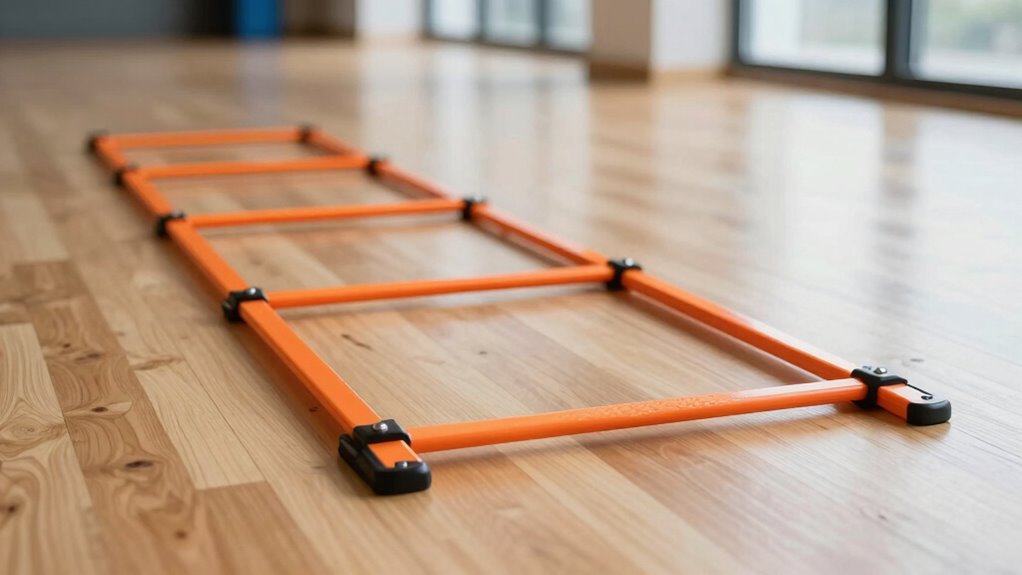

In your speed ladder workout, focus on quick, precise footwork to improve pacing fast. It helps you develop better control, coordination, and speed, while maintaining proper form to prevent injuries. By starting slowly and gradually increasing your speed, you train your nervous system to adapt to various paces. This build-up enhances mental focus and movement awareness, making you more confident in controlling your pace during runs or races. Keep going, and you’ll gain even more insights into mastering your timing and rhythm.

Get workout gear delivered free with Prime
- Fast, free delivery on millions of items
- Prime Video, Amazon Music and more included
- Member-only deals all year
Key Takeaways
- Gradually increase ladder speed to train nervous system adaptation for better pacing control.
- Incorporate controlled, deliberate footwork to develop consistent effort and rhythm.
- Use interval timing to practice maintaining steady pace during different workout phases.
- Focus on mindful movement to enhance awareness of effort levels and pacing adjustments.
- Combine speed ladder drills with endurance runs for integrated pacing and speed development.

If you’re looking to boost your agility, speed, and coordination, a speed ladder workout is an effective and versatile training method. This type of workout not only improves your overall athleticism but also helps you develop better pacing, which is essential for many sports. As you work through ladder drills, you’ll notice improvements in your running form, making your movements more efficient and reducing the risk of injury. Proper running form involves maintaining a tall posture, engaging your core, and landing softly on your feet—all aspects that become more natural as you practice with the ladder. When you focus on quick, precise footwork, you learn to control your pace and avoid unnecessary strain, which is critical for injury prevention.
Speed ladder drills challenge you to move quickly and accurately, forcing you to stay light on your feet. This emphasis on quick, controlled steps teaches you to distribute your effort evenly, preventing overexertion and muscle imbalances that could lead to injuries down the line. As you progress, you’ll develop muscle memory that translates into your regular running or sport-specific movements, helping you maintain proper form even when you’re tired or under pressure. This consistency in technique is a key element of injury prevention because it minimizes awkward landings and improper biomechanics, both common culprits behind common sports injuries.
Furthermore, these drills help you learn pacing by encouraging you to start slow and gradually increase speed while maintaining control. This gradual build-up trains your nervous system to adapt to different speeds, so you become more comfortable adjusting your pace mid-run or during a game. Over time, you’ll better understand how to conserve energy and avoid rushing, which often leads to burnout or injury. The repetitive nature of ladder exercises also promotes mental focus, teaching you to stay present and deliberate in your movements—an essential skill for pacing and injury avoidance.
Incorporating speed ladder workouts into your routine ensures you develop a balanced approach to speed and control. You learn to move efficiently, with good running form, and become more aware of how your body responds to different paces. This awareness helps prevent injury by encouraging proper mechanics and reducing the likelihood of overuse or missteps. Ultimately, the combination of improved pacing, better running form, and injury prevention makes the speed ladder an invaluable tool for athletes aiming to elevate their performance safely and effectively.
speed ladder agility training equipment
As an affiliate, we earn on qualifying purchases.
As an affiliate, we earn on qualifying purchases.
Frequently Asked Questions
How Often Should I Do Speed Ladder Workouts Weekly?
You should do speed ladder workouts 2 to 3 times a week, fitting them into your training schedule for peak pacing improvement. This frequency allows enough recovery time while maintaining consistent progress. Make sure to track your progress during each session to see improvements in agility and speed. Adjust the intensity or rest days based on how your body responds, ensuring you stay injury-free and continue advancing efficiently.
Can Beginners Safely Perform Speed Ladder Exercises?
Yes, beginners can safely perform speed ladder exercises, but start slowly and focus on proper form. Incorporate basic drills first, gradually progressing to more advanced ones as your coordination improves. Always warm up to prevent injuries and include injury prevention techniques like stretching and proper footwear. Listening to your body is key—stop if you feel pain, and don’t push too hard too fast to avoid setbacks.
What Equipment Is Necessary for an Effective Speed Ladder Workout?
Think of your speed ladder as a race car, and the equipment essentials are your tools for victory. For an ideal setup, all you need is a sturdy speed ladder, a flat surface, and comfortable athletic shoes. These elements guarantee smooth, safe movement. No fancy gear required—just focus on precise placement and quick feet. With the right equipment, you’ll accelerate your pacing skills faster than you imagined.
How Long Does It Take to See Pacing Improvements?
You can expect to see pacing improvements within a few weeks of consistent speed ladder workouts. As you practice, you’ll notice increased pacing consistency and endurance development, making it easier to maintain your target pace during runs. Regular sessions, about 3-4 times a week, accelerate progress. Stick with it, and you’ll find your ability to control pace and sustain effort improves noticeably, boosting your overall running performance.
Are There Any Common Mistakes to Avoid During the Workout?
Think of your workout as a fragile glass—mistakes can easily shatter progress. To avoid common pitfalls, focus on precise foot placement, ensuring quick, light steps without overstriding. Also, maintain steady breathing techniques to keep oxygen flowing and stay relaxed. Rushing through drills or neglecting form can hinder your learning curve. Stay attentive, and you’ll build better pacing skills faster, like a well-tuned engine.
plyometric speed ladder for athletes
As an affiliate, we earn on qualifying purchases.
As an affiliate, we earn on qualifying purchases.
Conclusion
Think of this speed ladder workout as your personal compass, guiding you through the terrain of pacing with precision and agility. As you practice, you’ll find your rhythm sharpening like a finely tuned engine, ready to race ahead. Embrace each step as a building block toward faster, more controlled movements. With dedication, you’ll master the art of pacing, turning your strides into a symphony of speed and confidence—your journey toward peak performance is just a ladder away.
As an affiliate, we earn on qualifying purchases.
professional speed ladder for sports training
As an affiliate, we earn on qualifying purchases.
As an affiliate, we earn on qualifying purchases.
Halloween Picks
halloween
As an affiliate, we earn on qualifying purchases.