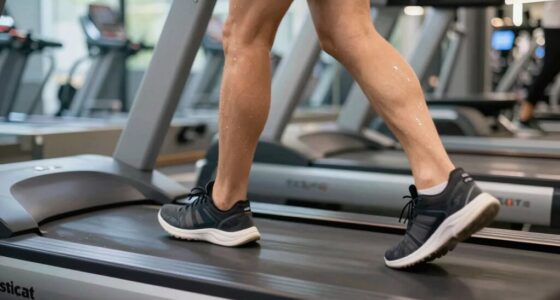
To improve your running consistency more than just increasing speed, adopt a disciplined interval training routine on the treadmill. Alternating between high-intensity bursts and recovery periods trains your body to handle varying paces, boosting endurance and preventing burnout. It also sharpens your form and awareness, helping you develop smoother stride mechanics and better posture. Focusing on these habits builds a solid foundation for sustainable progress—keep going to discover more strategies to elevate your running experience.

Get workout gear delivered free — and shop member deals
- Fast, free delivery on millions of items
- Access to Prime Big Deal Days deals on October 6–7
- Prime Video, Amazon Music and more included
Key Takeaways
- Developing mindful running habits enhances body awareness, enabling adjustments that improve consistency more than focusing solely on speed.
- Emphasizing proper stride mechanics and form fosters sustainable running patterns over time.
- Incorporating regular interval training builds endurance and consistency by training the body to handle varied paces.
- Focusing on breathing and posture optimization reduces fatigue and maintains steady effort during treadmill sessions.
- Establishing disciplined, injury-free routines promotes long-term consistency over short-term speed improvements.

If you want to run more consistently, focusing on your treadmill habits can be more effective than simply chasing faster speeds. One of the best habits you can develop is incorporating interval training into your routine. Instead of always pushing for maximum speed, you alternate between high-intensity bursts and recovery periods. This approach trains your body to handle varying paces, which improves endurance and helps you stay steady over longer distances. When you practice interval training regularly, you learn to manage your effort and avoid burnout, making your runs more sustainable. It also encourages you to pay closer attention to your stride mechanics during each phase. As you switch between faster and slower intervals, you become more aware of your running form, ensuring you’re not overstriding or landing improperly. Proper stride mechanics reduce fatigue and injury risk, which in turn promotes consistency. Developing Proper stride mechanics during treadmill workouts helps you build muscle memory that supports smoother, more efficient running. You might notice that, with practice, your foot strikes become more natural, your cadence improves, and your overall rhythm stabilizes. These improvements make it easier to keep going without feeling strained or out of sync. By consciously adjusting your stride length and cadence during your treadmill sessions, you also prevent common issues like heel striking or overstriding, which can slow you down or cause injuries. Over time, this focus on form turns into a habit that carries over into outdoor runs, reinforcing your ability to stay consistent. Additionally, implementing mindful running techniques can enhance your focus and awareness during each session. This mindfulness helps you recognize early signs of fatigue or improper form, allowing you to correct yourself before problems develop. Incorporating body awareness into your training further enhances your ability to maintain proper technique and prevent injuries. Moreover, paying attention to your breathing patterns can help optimize oxygen intake and reduce fatigue during your runs. A consistent routine that emphasizes correct running posture can significantly reduce muscular imbalances and improve overall efficiency. In the end, it’s not just about running faster but about creating habits that foster steady, injury-free progress. Developing disciplined interval training and paying attention to your stride mechanics can transform your treadmill sessions into powerful tools for sustainable improvement.
treadmill interval training workout
As an affiliate, we earn on qualifying purchases.
As an affiliate, we earn on qualifying purchases.
Frequently Asked Questions
How Long Should I Maintain a Treadmill Running Habit?
You should aim to maintain your treadmill running habit for at least 8 to 12 weeks to build lasting consistency. During this time, focus on steady duration and forming a routine that fits your schedule. Consistent effort helps reinforce the habit, making it easier to stick with over the long term. Remember, gradual progress and regularity are key to transforming your treadmill workouts into a sustainable, lifelong habit.
Can Treadmill Running Replace Outdoor Running Completely?
You can rely on treadmill running for your workouts, but it shouldn’t completely replace outdoor running. Indoor vs. outdoor runs offer different benefits; outdoor runs expose you to varied terrain and weather, enhancing adaptability. Treadmill technology, like incline and pace controls, simulates outdoor conditions, but outdoor running improves mental resilience and engages more muscles. Incorporate both for balanced training, maximizing your endurance and overall running performance.
What Are Common Mistakes Beginners Make on the Treadmill?
You often make mistakes like neglecting proper running posture, which can lead to strain or injury. Also, make sure your treadmill is well-calibrated; unsteady speed can throw off your rhythm. Focus on maintaining an upright posture, relaxed shoulders, and a slight forward lean. Regularly check treadmill calibration settings, especially if you notice discrepancies in pace or feel unusual discomfort. These habits help you run more efficiently and reduce injury risk.
How Do I Stay Motivated to Run Consistently on a Treadmill?
Did you know that runners who use interval training are 30% more likely to stay motivated? To stay consistent, try mixing up your workouts with interval training, which keeps things exciting and prevents boredom. Incorporate motivation techniques like setting small goals or listening to energizing music. These methods boost your enthusiasm, making it easier to stick with your treadmill routine and improve your running consistency over time.
Does Treadmill Running Impact Overall Running Form?
Treadmill running can impact your overall running form if you’re not mindful. It often alters running biomechanics because of the consistent surface and lack of varied terrain. To minimize this, make sure your treadmill is properly calibrated, so your stride remains natural. Focus on maintaining good posture, cadence, and stride length. Regularly check your treadmill’s calibration to keep your running biomechanics aligned, helping you transfer good form from treadmill to outdoor running.
running form and posture correction shoes
As an affiliate, we earn on qualifying purchases.
As an affiliate, we earn on qualifying purchases.
Conclusion
By focusing on your treadmill habit, you can boost your running consistency more than just trying to run faster. Did you know that runners who stick to a regular schedule are 50% more likely to improve over time? Making this small change can lead to steady progress and fewer setbacks. Keep showing up, stay consistent, and watch your performance grow—speed will follow when your habits are in place.
treadmill running cadence monitor
As an affiliate, we earn on qualifying purchases.
As an affiliate, we earn on qualifying purchases.
As an affiliate, we earn on qualifying purchases.
Evergreen bestsellers Picks
bestsellers
As an affiliate, we earn on qualifying purchases.