
TL;DR

Get workout gear delivered free with Prime
- Fast, free delivery on millions of items
- Prime Video, Amazon Music and more included
- Member-only deals all year
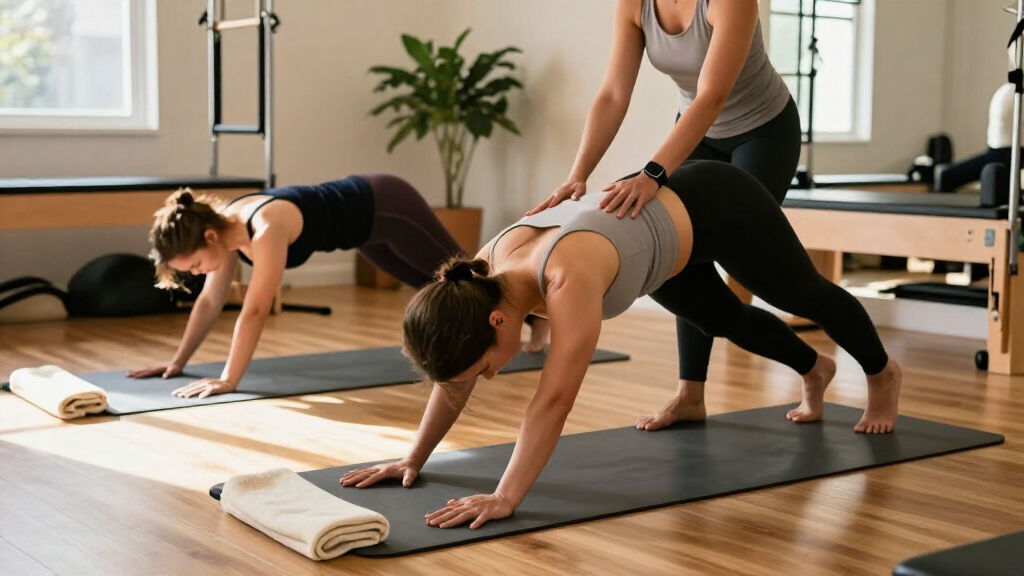
Boston-based Pilates instructor Julie Erickson recommends a sequence of roll up/roll down, swan prep and spine twists, with suggested repetitions for each. The routine is her guidance, not a tested finding that it is the quickest way to improve posture or reduce stiffness; the source gives no results data or timeframe.
Pilates instructor Julie Erickson recommends a three-movement sequence—roll up/roll down, swan prep and spine twist—as a way to work on posture and stiffness. The routine was described in a Fit&Well report, but its “quickest way” framing is the instructor’s recommendation, not a result established by a study cited in the article.
Erickson, identified by Fit&Well as the founder of Endurance Pilates and Yoga in Boston, suggests doing the sequence regularly. The report says the movements are intended to support mobility and strengthen the back, which may help people sit or stand more upright. It does not specify how often to practice the sequence or how soon someone might notice a difference.
The first exercise is the roll up/roll down, for eight to 10 repetitions. Sitting with legs extended and arms reaching forward, the practitioner rolls the torso down toward the floor, reaches the arms overhead, then curls back up and folds forward over the legs. The report offers a modification: roll down only partway or secure the feet under a strap or couch.
Next is swan prep, for five repetitions. Lying face down with hands beside the ribs and elbows bent, the practitioner presses into the hands to lift the chest while drawing the shoulders back, then lowers slowly. The third exercise is a seated spine twist, for five repetitions on each side: rotate the ribcage while keeping the hips and lower back still, return to centre and switch sides. The article describes a more challenging swan variation but does not provide a progression plan for the full routine.
A Short Sequence for Desk Stiffness
The routine is presented for readers who spend long periods sitting at a desk or looking down at a phone, habits the source associates with slouched posture. Its practical appeal is that it combines spinal movement, extension and rotation in three exercises, with a lower-intensity option for the roll down. That makes the recommendation relatively easy to understand and try, though it is not evidence that the sequence will correct posture for every person.
For readers, the distinction between a fitness recommendation and demonstrated outcome matters. Fit&Well reports Erickson’s advice but supplies no study, comparison with other routines, or measured results. The movements may form part of general exercise practice, but the article does not establish that they reduce pain, treat a condition or work faster than other approaches.
Anyone trying the sequence should work within a comfortable range and stop if a movement causes pain, dizziness or unusual symptoms. People with ongoing back or neck problems, recent injuries, or other health concerns can seek guidance from a qualified clinician or Pilates professional before starting. The source does not provide a screening checklist or medical advice.
Pilates resistance bands for home workouts
As an affiliate, we earn on qualifying purchases.
As an affiliate, we earn on qualifying purchases.
How the Three Moves Work
The Fit&Well report links the routine to the effects of prolonged desk work and phone use, then presents three movements rather than a full workout plan. The exercises differ in position and direction: the roll up/roll down moves between sitting and a curled position; swan prep lifts the chest from a face-down position; and the spine twist introduces seated rotation. Together, they address several kinds of spinal movement, according to the routine’s design.
The published instructions give repetitions but leave other programming details open. There is no stated schedule, total session length, warm-up, rest period or guidance on how long to continue the routine. Erickson’s claim that regular practice can improve mobility and back strength is reported as instructor guidance; the source does not describe a clinical or controlled evaluation of this particular sequence.
“The three-move sequence is presented as the “quickest way” to improve posture and reduce stiffness.”
— Julie Erickson, founder of Endurance Pilates and Yoga, as quoted in Fit&Well’s report
Pilates exercise equipment for posture improvement
As an affiliate, we earn on qualifying purchases.
As an affiliate, we earn on qualifying purchases.
Results and Practice Schedule Remain Open
The source does not say how quickly results may appear, what frequency Erickson recommends, or how the routine’s effects were assessed. It also does not compare the three exercises with other Pilates sequences or posture interventions. The headline’s “quickest” wording is therefore not substantiated by comparative evidence in the material provided.
It is also unclear how suitable the sequence is for people with particular injuries, chronic pain or limited mobility. The report includes one easier option for the roll down and one harder option for swan prep, but no broader adaptations or advice for deciding whether an exercise is appropriate. No independent expert assessment is included in the source material.
As an affiliate, we earn on qualifying purchases.
What Readers Can Verify Next
The source provides no announced follow-up study, schedule or next publication date. Readers considering the routine can follow the stated repetitions while keeping movements controlled and within a comfortable range, and can ask a qualified instructor to check technique. Those with existing health conditions or persistent symptoms should consult a health professional before changing their exercise routine.
Any stronger conclusion about speed or effectiveness would require evidence beyond the instructor’s recommendation, such as a defined practice plan and measured outcomes over time. Until such information is available, the sequence is best described as a suggested Pilates routine, rather than a proven fastest method for changing posture or relieving stiffness.
As an affiliate, we earn on qualifying purchases.
Key Questions
What are the three exercises in the routine?
The sequence consists of the roll up/roll down, swan prep and a seated spine twist.
How many repetitions does the report suggest?
Fit&Well lists eight to 10 repetitions for the roll up/roll down, five for swan prep, and five spine twists on each side.
Does the source prove this is the quickest way to improve posture?
No. The “quickest way” description reflects the instructor’s recommendation. The source material provides no comparative study or measured results showing that this routine works faster than other options.
How often should someone do the routine?
The report says to practice it regularly but does not specify a weekly frequency or duration. It also gives no timeline for expected changes.
What if an exercise causes discomfort?
Stay within a comfortable range and stop if a movement causes pain or unusual symptoms. People with injuries, ongoing back or neck concerns, or other health conditions should seek professional guidance before starting.
Source: rss
Halloween Picks
halloween
As an affiliate, we earn on qualifying purchases.