TL;DR

Get workout gear delivered free with Prime
- Fast, free delivery on millions of items
- Prime Video, Amazon Music and more included
- Member-only deals all year
LumiMind’s LumiSleep D1 is presented as an EEG headband that adjusts acoustic guidance in response to brain signals, including during bedtime wind-down after exercise. The product is non-pharmaceutical and is not intended as a medical device; the supplied report does not establish improved sleep outcomes or independent performance results.
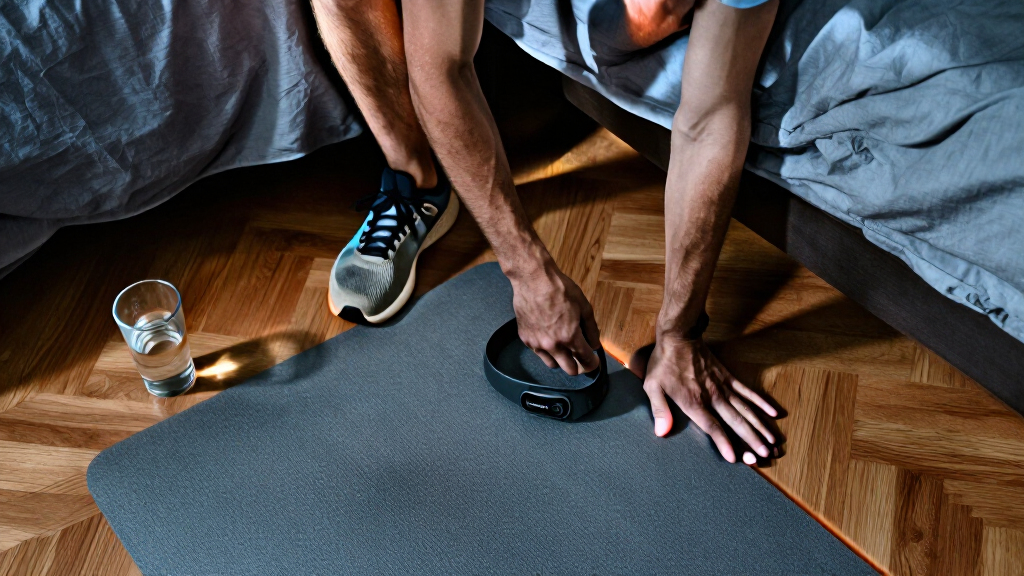
LumiMind’s LumiSleep D1 is a headband designed to monitor brain activity and adjust acoustic guidance in real time, with the company positioning it as an aid for winding down after evening exercise as well as for returning to sleep and taking naps. An Athletech News report describes its features, but the material does not establish that it improves sleep outcomes or provide independent test results.
The device uses a seven-point array of soft dry EEG electrodes placed against the forehead, according to the report. LumiMind says the headband processes signals locally and uses changes in detected brain activity to adapt a rhythmic audio element during a session. The system is called Real-Time Neural Coupling Modulation, or RTNCM; the company describes it as a continuous process of monitoring signals and adjusting sound.
Its SleepGuide audio combines a user-selected SubTone soundscape, such as rain or tonal music, with AuthenticBeats, a low-frequency pulse that LumiMind says is generated in response to current EEG readings. The report says users start a session with a button after fitting the headband and choosing a soundscape in the LumiMind app. The app is used to manage preferences, while the company says EEG processing and sound generation take place on the device, without a continuing phone or cloud connection.
LumiMind describes the product as usable for more than the initial bedtime routine. Users may remove it once drowsy or after about 30 minutes, or leave it on to monitor the transition into sleep. For an overnight wake-up, the report says the user can put it back on if needed and double-click a physical button to restart guidance. The company also presents it as an option for short daytime naps and travel. The report identifies it as non-pharmaceutical support, not a diagnostic or therapeutic medical device, and says improved sleep outcomes are not guaranteed.
A Sleep Aid for Post-Workout Evenings
For people who exercise late, the product is aimed at a specific gap between finishing a workout and feeling ready to sleep. Its proposed distinction from a conventional sleep tracker is that it does not only collect or display information: the company says EEG readings shape audio during the session. That could make it relevant to readers who want a hands-off wind-down routine rather than another set of sleep metrics to review.
That positioning should not be mistaken for evidence of a particular result. The source describes the intended use and the mechanism as presented by LumiMind, but it supplies no clinical findings, comparative testing or quantified sleep outcomes. Readers considering the device should distinguish its stated design from proof that it helps users fall asleep faster or sleep better. Its stated non-medical status also means it should not be treated as a replacement for professional advice about persistent sleep problems.
As an affiliate, we earn on qualifying purchases.
From Sleep Metrics to Adaptive Audio
Many consumer sleep products emphasize recording or summarizing sleep data. LumiMind’s pitch for the D1 instead centers on responding to signals while the user is resting. According to the report, the system is intended to identify a brainwave pattern the company calls the Sleep Onset Pattern and adjust an audio rhythm as brain activity changes. This is the company’s account of its approach, not an independently verified description of the product’s effectiveness.
The report also describes practical features intended for use in bed: a cushioned over-ear structure, a lightly elastic headband and near-ear air-conduction audio. LumiMind says the design is intended to remain stable when users lie on their backs or sides. It states that the device does not require a phone screen during a session, a point relevant to its proposed use after waking at night. The article says the design has received recognition from Red Dot, the Bronze A’ Design Award and DNA Paris Design Awards; those awards concern design recognition and do not establish health benefits.
The supplied source points readers to LumiMind’s website and a Kickstarter campaign, but gives no campaign status, funding total, retail price or confirmed shipping schedule. Those details are needed to assess whether the headband is available now, how much it will cost and when backers or customers could receive it.
“The device uses real-time brain-signal monitoring and adaptive sound to support bedtime, overnight re-sleep and daytime naps.”
— LumiMind, as described in the Athletech News report
As an affiliate, we earn on qualifying purchases.
Evidence, Price and Launch Details
The supplied report does not give independent testing or clinical evidence showing whether the D1 changes how quickly users fall asleep, how often they wake, or how rested they feel. It also does not explain how LumiMind validated the Sleep Onset Pattern, how its performance compares with other sleep products, or what data the app stores beyond the company’s statement that EEG processing and sound generation occur on-device.
Price, availability and delivery timing are also not specified in the source material. It refers to a Kickstarter campaign but does not state whether it is open, funded or completed. The material likewise does not provide details on battery life, cleaning, fit across different users or what happens if the electrodes do not maintain stable contact. These questions remain unanswered here.
As an affiliate, we earn on qualifying purchases.
Campaign and Product Details to Watch
The next verifiable steps are to check LumiMind’s current product and campaign listings for availability, price, delivery estimates and buyer terms. If the product reaches customers, independent testing and clearly reported results would help establish how well its EEG-responsive audio works in ordinary use, including after evening training and during overnight wake-ups.
For now, the available reporting supports a description of the D1’s intended design and routine, not a conclusion that it produces better sleep. LumiMind’s stated next point of access is its website and Kickstarter campaign; the source provided does not confirm a launch date or further testing milestone.
As an affiliate, we earn on qualifying purchases.
Key Questions
What is LumiSleep D1?
LumiSleep D1 is an EEG headband that LumiMind says monitors brain activity and adjusts acoustic guidance. The company presents it for bedtime wind-down, returning to sleep after waking and daytime naps.
How is it meant to fit into a post-workout routine?
After a workout, a user can fit the headband, choose an ambient sound in the app and start a session. LumiMind says the device then adapts a rhythmic audio element as it detects changes in brain activity. The source does not establish that this makes users fall asleep faster.
Does the headband need a phone throughout the session?
According to LumiMind, the app is used to select a soundscape and manage the experience, while EEG processing and audio generation happen on the device. The report says ongoing screen interaction is not required once a session starts.
Is LumiSleep D1 a medical device?
The supplied report says it is not intended as a diagnostic or therapeutic medical device, and that improved sleep outcomes are not guaranteed. People with ongoing sleep concerns should not treat it as a substitute for professional medical advice.
Is the product available, and how much does it cost?
The report points readers to LumiMind’s website and Kickstarter campaign but does not provide a confirmed price, availability status or shipping date. Those details remain unclear from the supplied information.
Source: rss
Halloween Picks
halloween
As an affiliate, we earn on qualifying purchases.