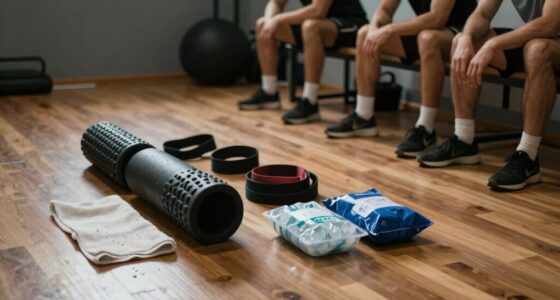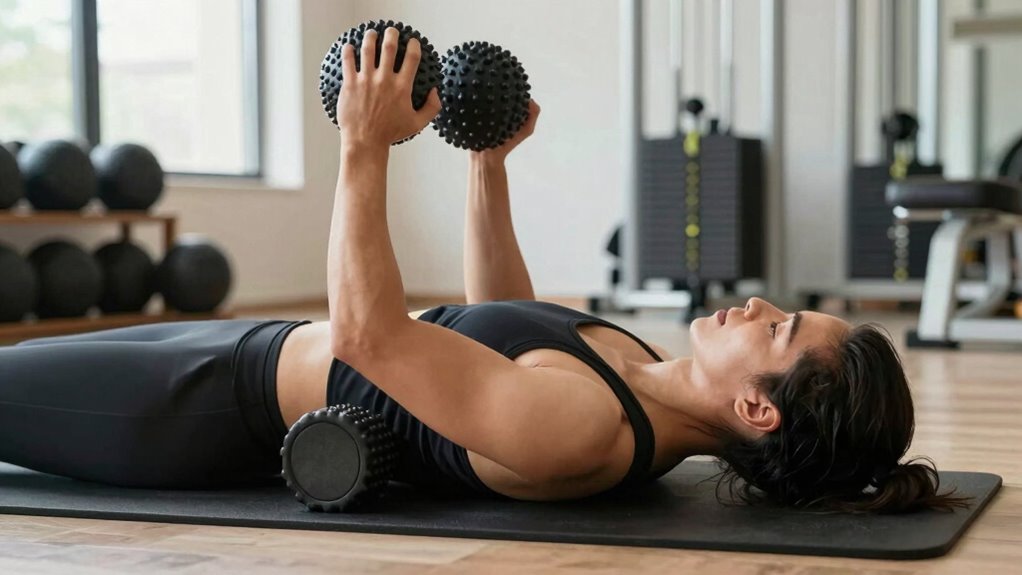

To make foam rolling less random and more useful, focus on targeting specific muscle groups that feel tight or sore. Use slow, controlled movements and apply gentle, appropriate pressure rather than pushing too hard. Spend 30-60 seconds on each area and incorporate deep breathing to relax your muscles. Adjust pressure gradually and avoid rushing through your routine. Keep practicing with proper technique, and you’ll discover how to get better results with less effort.

Get workout gear delivered free with Prime
- Fast, free delivery on millions of items
- Prime Video, Amazon Music and more included
- Member-only deals all year
Key Takeaways
- Identify and target specific tight or sore muscle groups rather than rolling randomly.
- Use slow, controlled movements and focus on proper technique for effective tissue release.
- Apply gentle, consistent pressure, gradually increasing as muscles become more pliable.
- Spend 30-60 seconds on each area, avoiding rushing through the routine for better results.
- Incorporate deep breathing to enhance relaxation and improve the effectiveness of foam rolling.
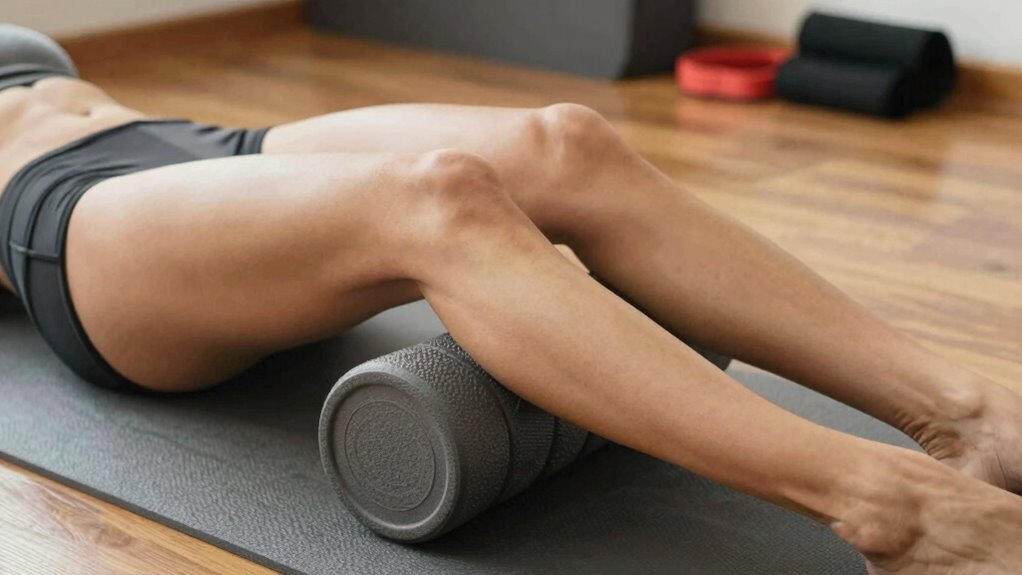
Foam rolling can be a game-changer for your recovery and mobility, but only if you use it effectively. Many people approach foam rolling with a vague sense of purpose, simply rolling over muscles without a clear plan. This randomness often leads to little benefit and can even cause discomfort or injury. To get the most out of your foam rolling sessions, you need to focus on proper foam rolling techniques. This means understanding how to target specific muscle groups, applying the right amount of pressure, and moving slowly to allow your tissues to release tension. Instead of rushing through your routine, spend time on areas that feel tight or sore, maintaining pressure for 30-60 seconds before moving on. Proper technique also involves controlling your breathing—inhale deeply as you prepare, then exhale slowly as you roll, helping your muscles relax and increasing the effectiveness of the release. Recognizing the importance of tissue elasticity can help you better understand how foam rolling promotes flexibility and recovery.
A common misconception is that foam rolling is just about pain tolerance. Many think that the more pain you endure, the better the results. In reality, you should aim for a comfortable discomfort, not pain. Pushing too hard can cause bruising or inflammation, which hampers recovery rather than helps it. If you feel sharp pain, ease up on the pressure or switch to a softer foam roller. Remember, foam rolling is about encouraging blood flow and tissue elasticity, not punishing your muscles. Incorporating foam rolling techniques that emphasize gentle, controlled pressure ensures you’re stimulating your tissues without risking damage. Additionally, understanding muscle response can guide you in adjusting your pressure and duration for optimal results. Over time, as your muscles become more pliable, you can gradually increase pressure, but always listen to your body. Developing awareness of proper pressure application can help prevent overdoing it and support lasting improvements.
As an affiliate, we earn on qualifying purchases.
Frequently Asked Questions
How Often Should I Foam Roll for Optimal Results?
You should foam roll 3 to 4 times a week for ideal recovery routine. Consistent foam rolling helps release muscle tension, improve flexibility, and prevent injuries. Adjust the foam rolling frequency based on your activity level and how your muscles feel. If you’re sore or tight, increase your sessions slightly. Remember, moderation is key, so avoid overdoing it, which can cause irritation or bruising.
Can Foam Rolling Replace Stretching or Other Recovery Methods?
Foam rolling can’t replace stretching or other recovery methods, even if it seems to magically improve muscle flexibility overnight. While foam rolling helps reduce muscle tightness and promotes injury prevention, it’s just one piece of the puzzle. Relying solely on it ignores the benefits of stretching, proper hydration, and rest. Incorporate all these methods for a balanced approach that truly enhances recovery and keeps your muscles in top shape.
What Are Signs of Overdoing Foam Rolling?
If you notice persistent muscle soreness, increased pain, or tenderness after foam rolling, you might be overdoing it. Overdoing foam rolling can also elevate injury risk by irritating tissues or causing bruising. Pay attention to how your body responds—if it feels worse instead of better, cut back on frequency or intensity. Always listen to your body to avoid overtraining and prevent potential injury.
Is Foam Rolling Suitable for All Fitness Levels?
Foam rolling is suitable for all fitness levels—think of it as a magic wand for muscle recovery! But always prioritize foam rolling safety; beginners should start gently and target specific muscle groups to avoid overstimulation. Advanced athletes can dig deeper, but listening to your body is crucial. Whether you’re just starting or a pro, customizing your routine ensures effective muscle group targeting without risking injury.
Are There Specific Techniques for Different Muscle Groups?
Yes, you should use specific techniques tailored to different muscle groups. Focus on muscle targeting by adjusting your foam rolling position and pressure. Technique variations include slow, controlled movements for larger muscles like quads and hamstrings, and pinpoint pressure for smaller, sensitive areas such as calves or shoulders. This guarantees effective foam rolling, reduces discomfort, and helps you target problem areas more precisely for better recovery and flexibility.
As an affiliate, we earn on qualifying purchases.
Conclusion
By following these tips, you’ll transform foam rolling from a chaotic, aimless activity into a precise, powerful tool for your recovery and performance. Think of it as turning a wandering storm into a focused, unstoppable force—your muscles will thank you. Consistency, proper technique, and targeted pressure make all the difference. Soon, foam rolling won’t just be a random task—it’ll be your secret weapon that elevates your fitness journey to legendary heights.
As an affiliate, we earn on qualifying purchases.
foam roller with textured surface
As an affiliate, we earn on qualifying purchases.
As an affiliate, we earn on qualifying purchases.
Halloween Picks
halloween
As an affiliate, we earn on qualifying purchases.