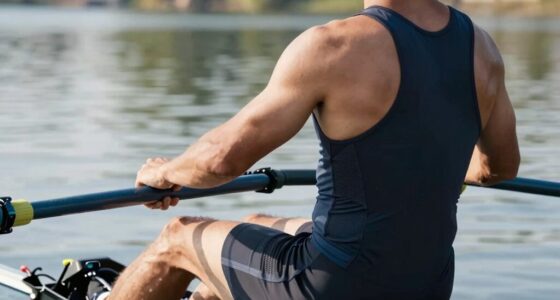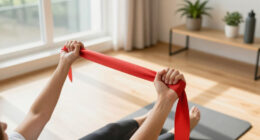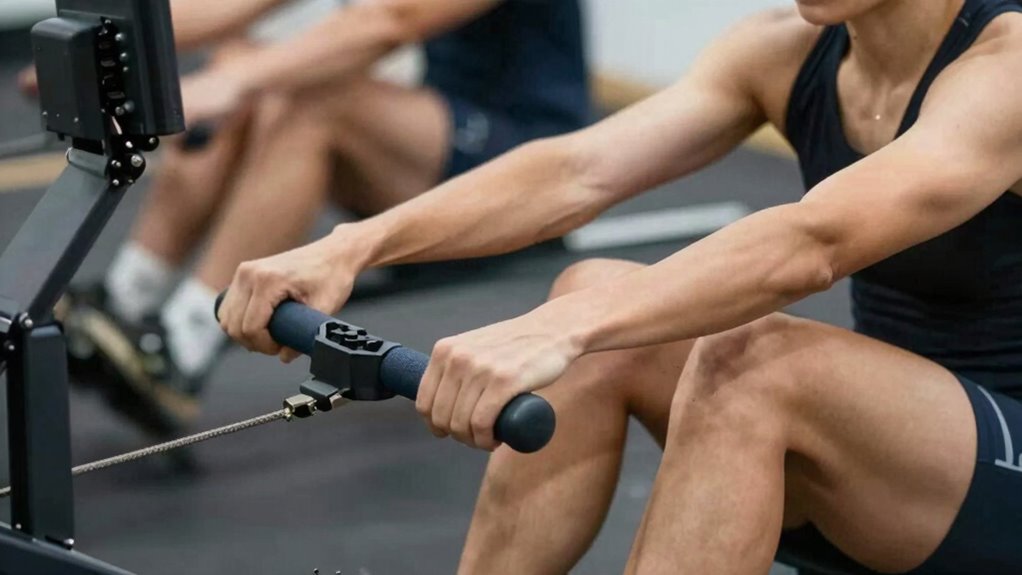

To avoid yanking with your arms on a rowing machine, focus on engaging your legs and core first before pulling with your arms. Push through your heels, straighten your knees, and drive your hips back to generate power. Keep your grip relaxed and use your body’s momentum, not your arms, to complete each stroke. Maintaining proper technique prevents fatigue and injury. Keep practicing good form, and you’ll find you’re rowing more efficiently and comfortably.
Key Takeaways
- Focus on driving with your legs and hips first, then follow through with your arms.
- Keep your elbows close to your sides and avoid pulling with just your arms.
- Maintain proper body posture to ensure power transfers from legs and core.
- Use a controlled, fluid motion rather than jerking or pulling abruptly.
- Engage your core muscles to support movement and reduce reliance on arm strength.
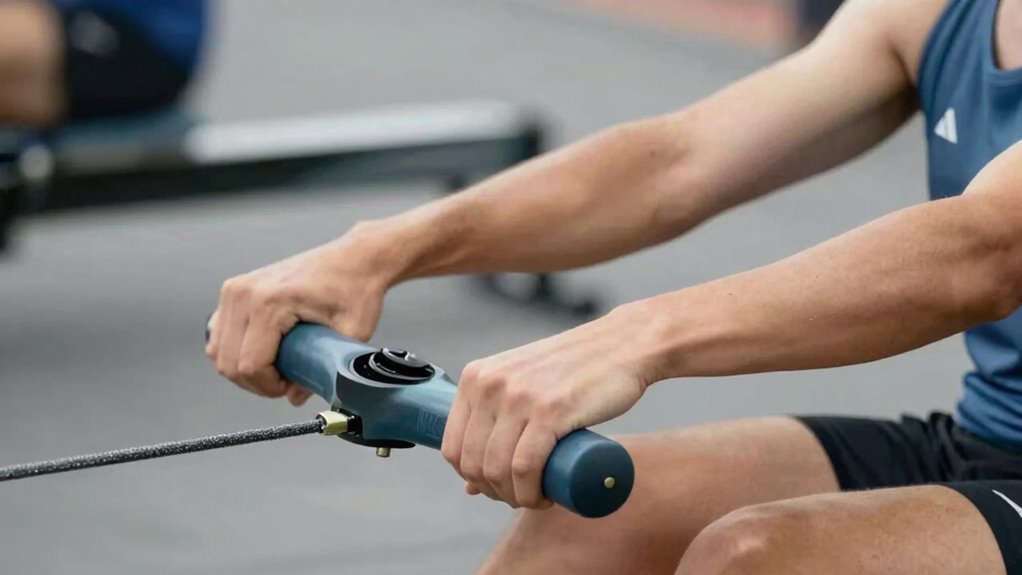
Using your arms to pull on a rowing machine might seem natural, but it’s a common mistake that can hinder your workout and lead to injury. Instead of relying solely on your arms, focus on engaging your legs and core to generate power. A proper grip is essential here; you want to hold the handle firmly but not tightly, avoiding a death grip that can cause tension in your arms and shoulders. Keep your hands relaxed, allowing your grip to be secure yet comfortable, which helps distribute effort evenly and prevents fatigue.
Use your legs and core, not your arms, for efficient, injury-free rowing. Keep your grip relaxed and steady.
Your breathing techniques play a critical role in maintaining proper form and maximizing efficiency. Inhale as you prepare to engage, typically during the recovery phase when you’re moving back to the starting position. Exhale smoothly as you drive through the legs, lean back slightly, and pull the handle towards your torso. Coordinating your breath with your movements ensures you stay relaxed and focused, reducing the temptation to yank with your arms. Proper breathing also supplies your muscles with oxygen, helping you maintain stamina over longer rows and avoid unnecessary strain.
When you begin each stroke, remember that the power should come from your legs. Push through your heels, straighten your knees, and drive your hips back, using your core to stabilize your torso. As your legs extend, lean back slightly, engaging your core muscles. Only then should you pull the handle towards your lower chest, keeping your elbows close to your sides. This sequence ensures you’re utilizing your largest muscle groups and not overloading your arms, which are primarily responsible for finishing the movement rather than initiating it. Developing awareness of your muscle engagement will help you maintain proper form and prevent fatigue. Incorporating technique practice consistently will help prevent the development of bad habits that can lead to strain or injury over time. Additionally, paying attention to your body positioning can help ensure you are aligning yourself correctly for optimal power transfer and injury prevention.
It’s common to see beginners yank on the handle, especially when tired, but this often results in poor form and increased risk of injury. To avoid this, focus on a smooth, controlled motion. Think of the stroke as a fluid sequence: legs, hips, then arms. Keep your movements deliberate, avoiding jerking or pulling with your arms alone. Your arms should act as a connector, not the main source of power. Developing awareness of your form and maintaining proper technique will help you prevent overexertion and ensure your workout remains safe and effective. Over time, you’ll notice improved endurance, better posture, and fewer aches and pains. Remember, the goal is to work smarter, not harder—by engaging the right muscles and maintaining controlled, rhythmic breathing, you’ll master the art of effective rowing without yanking with your arms.

Universal Rower Handle Cover for Rowing Machines Compatible with Concept 2, Hydrow, Nordictrac, Sunny, Fits for Most Rowing Machine,Row Without Pain, Socks Over Handle Protect Hands and Absorbs Sweat
- Protects Hands from Blisters: Made of elastic knitted cotton for comfort
- Breathable and Sweat-Absorbing: Allows hands to breathe and absorbs sweat
- Non-Slip Grip: Provides secure grip during workouts
As an affiliate, we earn on qualifying purchases.
As an affiliate, we earn on qualifying purchases.
Frequently Asked Questions
Can Using Heavier Weights Help Prevent Arm Yanking During Rowing?
Using heavier weights won’t necessarily prevent arm yanking during rowing. Instead, focus on proper technique and muscle engagement to maintain control. Heavier weights might increase the risk of poor form, leading to yanking. To correct your technique, concentrate on engaging your core and legs, then smoothly pull with your arms. Consistent practice with lighter weights helps develop better control and guarantees you avoid the arm yanking mistake.
What Are Common Signs I’M Yanking With My Arms?
You’ll notice signs like arm fatigue early on, especially if your arms tire quickly before your legs and back do. Another sign is inconsistent stroke rhythm, where your arms jerk or pull too suddenly instead of a smooth, flowing motion. If you feel strain or cramping in your arms, it indicates you’re yanking rather than using proper technique. Focus on maintaining a steady rhythm and engaging your core to prevent arm overuse.
How Does Proper Leg Drive Influence Arm Movement?
Think of your legs as the engine powering your row. Proper leg drive fuels your entire stroke, guiding arm movement and preventing yanking. When you engage your legs fully, your arms become assistants, not leaders, ensuring smooth arm coordination. This keeps your pulls efficient and safe, reducing strain on your shoulders. Focus on strong leg engagement first, then let your arms follow naturally, turning the rowing motion into a fluid, powerful dance.
Is It Okay to Pause During a Rowing Stroke?
Yes, it’s okay to pause briefly during a rowing stroke to focus on proper technique and muscle engagement. Just make sure your pause doesn’t disrupt your rhythm or cause you to lose momentum. A controlled pause allows you to emphasize a smooth shift from leg drive to arm pull, maintaining steady rowing technique. Keep your core engaged and avoid yanking with your arms, ensuring effective muscle engagement throughout the stroke.
How Often Should I Check My Form While Rowing?
Think of your form as a delicate dance—you should check it often to stay in perfect step. Every few minutes, glance at your posture, breathing techniques, and foot positioning to guarantee harmony. Keep your core engaged, breathe rhythmically, and avoid rushing. Regular checks help you stay aligned and safe, making your workout more effective and enjoyable. Trust your instincts, but don’t hesitate to refine your technique frequently.

Rowing Machine Feet Straps for Concept 2 Rower
- High-Quality Replacement: Compatible with Concept 2 rowers
- Durable Construction: Built to withstand intense rowing sessions
- Adjustable for Comfort: Customizable straps for a perfect fit
As an affiliate, we earn on qualifying purchases.
As an affiliate, we earn on qualifying purchases.
Conclusion
To avoid the ‘yank with your arms’ mistake, focus on maintaining proper form, engaging your core, and using your legs effectively. Keep your movements smooth, controlled, and deliberate. Remember, a strong, efficient stroke comes from a coordinated effort, not just your arms. Stay mindful of your technique, stay consistent in your practice, and stay patient as you improve. Ultimately, proper form leads to better results, prevents injuries, and keeps you rowing confidently and comfortably.
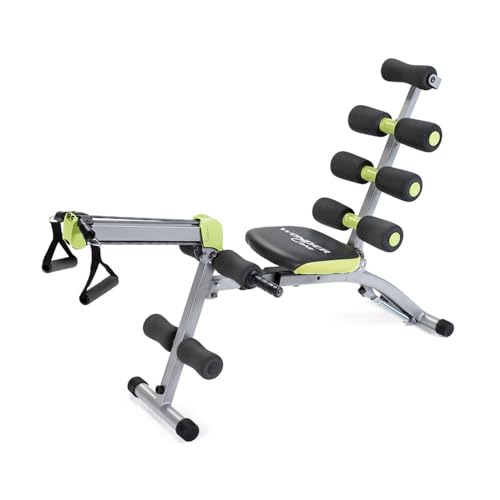
Wonder Core V2 Upgraded Adjustable Workout Bench & Ab/Rowing Machine – Total Gym Style Core Workout Equipment for Ab Workouts, Upper Body & Sit-Up Exercise
- Upgraded Frame and Headrest: Larger, taller, reinforced with adjustable levels
- Auto-Rebound Backrest: Provides resistance and support during sit-ups
- Multiple Resistance Levels: Three resistance settings for varied workouts
As an affiliate, we earn on qualifying purchases.
As an affiliate, we earn on qualifying purchases.

FEIERDUN Hydraulic Rowing Machine for Home Compact Adjustable Rower
- Full Body Workout: Engages multiple muscle groups with low-impact resistance
- Compact & Portable: Lightweight design for easy storage and transport
- Adjustable Resistance: 12 resistance levels for customized workouts
As an affiliate, we earn on qualifying purchases.
As an affiliate, we earn on qualifying purchases.