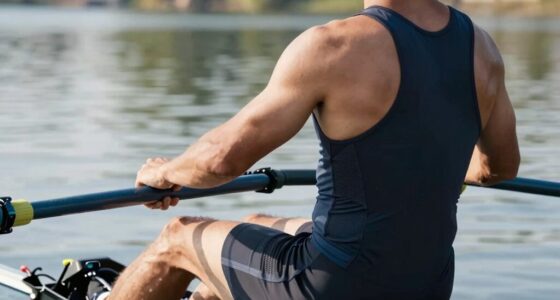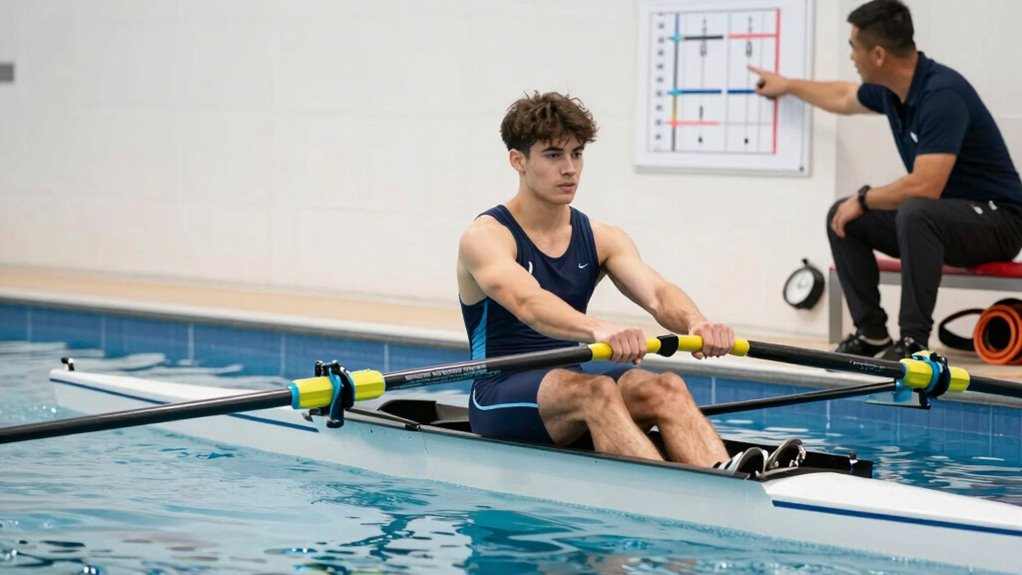

To improve your rowing technique without adding extra volume, focus on targeted drills that isolate different stroke phases, like pausing at the finish or practicing slow, controlled strokes. Pay close attention to your body positioning and ergonomic setup to guarantee proper muscle engagement and alignment. Visualization and mental focus help reinforce correct form, reducing fatigue and injury risk. By consistently applying these techniques, you’ll boost efficiency and power—stay tuned to learn more about fine-tuning your rowing skills.
Key Takeaways
- Focus on slow, controlled strokes to emphasize proper form and muscle engagement during drills.
- Isolate specific stroke phases, like the catch or finish, to refine technique without increasing total volume.
- Incorporate mental visualization to reinforce correct movements and improve muscle memory.
- Use ergonomic adjustments to optimize body positioning, ensuring efficient movement during technique-focused drills.
- Repeatedly practice deliberate, precise movements to enhance form and power without adding extra rowing sessions.
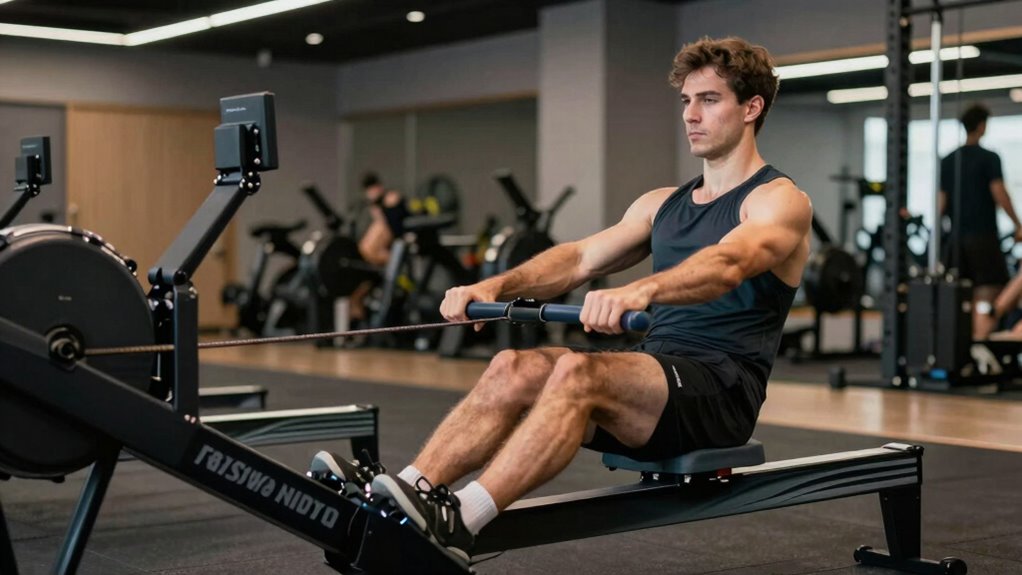
Ever wonder how to make your rowing strokes more efficient and powerful? The secret lies not just in adding more volume to your training but in refining your technique through targeted drills. Small adjustments can lead to big improvements, and the key is to focus on ergonomic adjustments and mental focus during your practice. When you pay attention to how your body moves and stays aligned, you reduce fatigue and prevent injury, allowing you to row more effectively without extra effort.
Start by honing your ergonomic adjustments. Proper seat height, handle grip, and foot placement are fundamental to ideal movement. When your seat is too high or low, or your handles are too tight or too loose, your stroke efficiency drops. Take the time to find a comfortable, natural position that keeps your back straight and shoulders relaxed. This alignment minimizes unnecessary strain, helping you generate more power with each pull. Remember, even small changes—like slightly adjusting your foot straps—can make a noticeable difference in your comfort and performance. When your body is properly aligned, your muscles work more efficiently, and you can focus more on executing each stroke with precision. Incorporating ergonomic adjustments into your routine helps optimize your biomechanics and enhances overall efficiency. Paying attention to biomechanical principles can further improve your technique and prevent common rowing injuries. Additionally, understanding and applying muscle engagement techniques can help activate the right muscle groups for maximum efficiency. Developing an awareness of joint movement can further refine your form and reduce strain during each stroke.
Optimal ergonomic setup—seat height, handle grip, and foot placement—maximizes efficiency and reduces strain for better rowing performance.
Mental focus plays an equally crucial role. During technique drills, clear your mind of distractions, and concentrate solely on your movement. Visualize the perfect stroke, from the catch to the finish, and be mindful of each phase. This mental engagement improves muscle memory, allowing you to internalize proper technique. When you’re fully present, you’re more likely to notice and correct mistakes, such as overreaching or rushing through the recovery. Maintaining mental focus also helps you stay consistent during drills, reinforcing good habits and building confidence in your technique.
Incorporate specific drills that isolate different parts of the stroke. For instance, pause at the finish to focus on your back position and arm extension, ensuring you’re not rushing through that phase. Use slow, controlled strokes to emphasize proper sequencing and ergonomic adjustments. These focused repetitions reinforce muscle memory and help you develop a more efficient, powerful stroke. As you become more aware of your body’s movements, your technique naturally improves, and you’ll find yourself rowing with less fatigue and more confidence.
Ultimately, improving your rowing technique doesn’t require extra volume; it’s about working smarter. By fine-tuning ergonomic adjustments and sharpening your mental focus during drills, you enhance your efficiency and power. These small, deliberate changes will translate into a more effective, injury-free rowing experience, helping you reach your goals faster and sustain your performance over time.

Rowing Machine Seat Cushion Compatible with Concept 2 Rower- Gel Seat Pad Also Compatible with Hydrow, Peloton and More Rowing Machines – Ideal Rower Accessories
- Ergo Tail Bone Relief Design: Reduces pressure and prevents discomfort
- Universal Fit: Fits all major rowing machines
- Contoured Shape: Secure and comfortable fit
As an affiliate, we earn on qualifying purchases.
As an affiliate, we earn on qualifying purchases.
Frequently Asked Questions
How Often Should I Incorporate Technique Drills Into My Rowing Routine?
You should incorporate technique drills into your rowing routine about 2-3 times a week. This drill frequency allows you to focus on refining your skills without overtraining. Use regular skill assessments to track progress and identify areas needing improvement. By consistently practicing these drills, you’ll develop better technique, efficiency, and power, all while avoiding extra volume that could lead to fatigue or injury.
Can Technique Drills Replace Regular Rowing Workouts?
Technique drills can’t fully replace regular rowing workouts, but they substantially boost your rowing efficiency and help prevent injuries. By focusing on proper form, you build a strong foundation that translates into better performance during longer sessions. Incorporate drills regularly to refine your technique without adding extra volume, ensuring you stay injury-free and maximize each workout’s effectiveness. Remember, balance between drills and full workouts is key for ideal progress.
What Equipment Is Necessary for Effective Technique Drills?
You only need basic equipment essentials for effective technique drills, like a rowing machine or a kayak paddle, depending on your focus. Consider incorporating drill variations such as pause drills, pause-and-go, or single-arm drills to target specific technical aspects. Using mirrors or video feedback can enhance your awareness. Keep it simple with minimal gear, and focus on precise movements to improve your rowing form efficiently.
How Do I Know if I’M Executing Drills Correctly?
You’ll know you’re executing drills correctly when you get clear form feedback from a coach or use video analysis to compare your technique against proper form. Focus on progressing through drill levels gradually, ensuring each stage feels controlled and precise before moving on. Consistent self-assessment and feedback help you refine your technique, so pay attention to your body’s cues and make adjustments as needed to maintain proper form during each drill.
Are There Specific Drills for Different Skill Levels?
Yes, there are specific drills for different skill levels. For beginners, focus on fundamental drills that emphasize proper body position and stroke rhythm, building a solid foundation. As you advance, incorporate precision drills that refine technique, timing, and power application. Adjust your drills based on your skill level, ensuring you’re continuously challenging yourself while reinforcing core skills. This tailored approach helps you improve efficiently without adding extra volume.

Universal Rower Handle Cover for Rowing Machines Compatible with Concept 2, Hydrow, Nordictrac, Sunny, Fits for Most Rowing Machine,Row Without Pain, Socks Over Handle Protect Hands and Absorbs Sweat
- Protects Hands from Blisters: Made of elastic knitted cotton for comfort
- Breathable and Sweat-Absorbing: Allows hands to breathe and absorbs sweat
- Non-Slip Grip: Provides secure grip during workouts
As an affiliate, we earn on qualifying purchases.
As an affiliate, we earn on qualifying purchases.
Conclusion
By incorporating focused technique drills into your rowing routine, you’ll open levels of efficiency and power you never thought possible. These drills are like secret weapons, transforming your form and making every stroke feel smoother than silk. Remember, consistent practice can turn your rowing into a finely-tuned machine — faster, stronger, and more unstoppable than you ever imagined. So, keep drilling, stay committed, and watch your performance soar into the stratosphere!

Rowing Machine Feet Straps for Concept 2 Rower
- High-Quality Replacement: Compatible with Concept 2 rowers
- Durable Construction: Built to withstand intense rowing sessions
- Adjustable for Comfort: Customizable straps for a perfect fit
As an affiliate, we earn on qualifying purchases.
As an affiliate, we earn on qualifying purchases.

Rowing Faster
- Product Code: SHK01448
As an affiliate, we earn on qualifying purchases.
As an affiliate, we earn on qualifying purchases.