
To build a rowing workout that protects your lower back, focus on core stabilization and proper form. Start with exercises like planks and bridges to strengthen your core, then guarantee your equipment setup supports good posture. During rowing, hinge at your hips, keep your spine neutral, and engage your core throughout each stroke. Move with controlled rhythm, avoiding rushing or arching your back. If you stay mindful of technique, you can enjoy effective sessions without risking injury. Keep exploring for more tips to stay safe.
Key Takeaways
- Prioritize core stabilization exercises to strengthen your back and support proper rowing form.
- Maintain correct technique: hinge at hips, engage core, and avoid spinal rounding during strokes.
- Use controlled, deliberate movements with a focus on rhythm rather than speed or intensity.
- Adjust equipment setup for proper ergonomics to ensure proper posture and reduce lower back strain.
- Regularly pause and reassess form to prevent overextension or arching of the lower back during workouts.

Rowing is a fantastic full-body workout, but if you’re not careful, it can put unnecessary strain on your lower back. To protect yourself and maximize your gains, focusing on core stabilization and maintaining proper form is essential. Your core acts as the foundation for every movement on the rower, helping distribute force evenly and preventing your lower back from overworking. When your core is engaged correctly, it creates a stable platform that supports your spine during each stroke, reducing the risk of injury and fatigue.
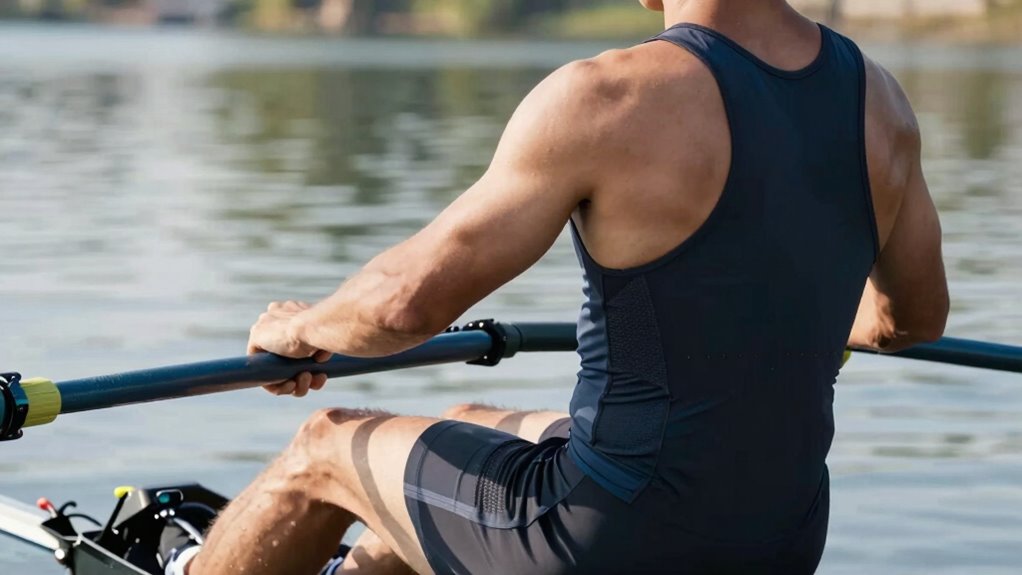
Engage your core and maintain proper form to protect your lower back during rowing.
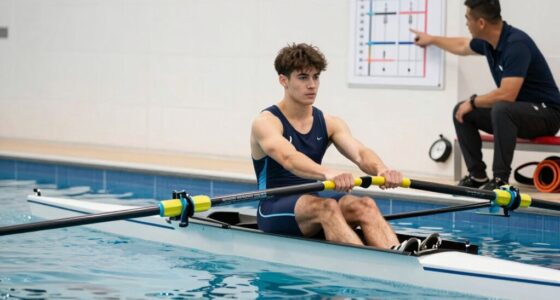
Proper form is key to building an effective and safe rowing routine. Start by sitting tall on the seat, with your shoulders relaxed and your chest slightly lifted. As you prepare to row, hinge at the hips rather than bending at the waist. This hip hinge keeps your spine in a neutral position, minimizing the risk of lower back strain. When pulling, drive through your legs first, then lean back slightly with your core engaged, and finally pull the handle towards your lower ribs. Make sure your back remains straight throughout the movement — avoid rounding or overarching your spine. Maintaining this posture ensures that your powerful leg drive translates efficiently into your pull without putting undue stress on your lower back.
Consistency in applying these principles will help you develop a rowing workout that’s both effective and safe. Focus on controlled, deliberate movements rather than rushing through strokes. Every pull should start with a strong leg drive, followed by a slight lean back, and then your arms pulling in sync. During the recovery phase, extend your arms first, then hinge at the hips and straighten your legs, returning to the starting position with your core still engaged. This fluid, rhythmic pattern keeps your muscles working efficiently and reduces the chance of compensating with your lower back. Additionally, understanding the importance of proper equipment setup can further help prevent injury and improve your technique. Paying attention to proper ergonomics can also make a significant difference in maintaining good posture and avoiding strain during your sessions. Incorporating core stabilization exercises, such as planks and bridges, can further enhance your ability to maintain proper form and reduce the risk of lower back pain. A focus on technique ensures that you’re engaging the right muscles and not compensating with your lower back. As you progress, pay close attention to your technique. If you notice your lower back arching or feeling strained, pause and reassess your form. Additionally, integrating muscle engagement strategies can help you stay mindful of activating the correct muscles during each stroke. Remember, the goal isn’t just to row fast or hard but to do so with mindful control that protects your body. By emphasizing proper form and core stabilization, you’ll enjoy the benefits of rowing without the unwelcome side effect of lower back pain.

Sunny Health & Fitness Smart Compact Adjustable Rowing Machine, 12 Levels Adjustable Resistance, Complete Body Workout, Connect via Bluetooth with Exclusive SunnyFit App – SF-RW1205SMART
【FULL BODY WORKOUT】Complete body workout that engages all major muscle groups with the smooth, hydraulic resistance that targets…
As an affiliate, we earn on qualifying purchases.
As an affiliate, we earn on qualifying purchases.
Frequently Asked Questions
Can Rowing Help Improve Lower Back Strength Safely?
Yes, rowing can improve your lower back strength safely when you focus on proper rowing posture and core engagement. Maintain a straight back and avoid hunching to prevent strain. Engage your core throughout each stroke to support your spine. Proper technique distributes the workload evenly, reducing injury risk. Consistent, controlled rowing with attention to posture and core activation helps strengthen your lower back without causing harm.
What Are Signs of Lower Back Strain During Rowing?
Like a warning siren, signs of lower back strain during rowing include persistent back pain, a sudden sharp ache, or discomfort that worsens with each stroke. You might notice poor posture correction, causing you to hunch or overreach. If your back feels tight or tender, it’s a clear signal to stop and reassess your form. Paying attention to these signs helps prevent injury and keeps your workout safe.
How Often Should I Rest Between Rowing Sessions?
You should rest 24 to 48 hours between rowing sessions to allow your muscles to recover. During your workouts, focus on proper rowing technique and core engagement to prevent injury and reduce lower back strain. Listen to your body; if you feel persistent soreness, give yourself more rest. Incorporating rest days helps maintain consistent progress while protecting your lower back from overuse.
Are There Specific Stretches to Prevent Back Pain?
You should definitely incorporate stretches that promote core activation and hip flexibility to prevent back pain. Try dynamic stretches like hip circles and leg swings before your workout. Post-exercise, do gentle lower-back and hamstring stretches, such as child’s pose and seated forward fold. These stretches help loosen tight muscles, improve movement, and reduce strain on your lower back, making your rowing sessions safer and more comfortable.
Which Rowing Machine Settings Minimize Back Stress?
To minimize back stress, focus on maintaining proper rowing technique—keep your core engaged and avoid overreaching. Adjust your machine calibration so the damper setting feels comfortable, usually around 3-5, to prevent excessive resistance. Proper setup and technique guarantee your back stays protected during each stroke. Regularly check your machine’s settings and stay mindful of your posture to prevent strain and promote efficient, safe rowing sessions.

Vinsguir Ab Roller Wheel, Abs Workout Equipment for Abdominal & Core Strength Training, Exercise Wheels for Home Gym, Fitness Equipment for Core Workout with Knee Pad Accessories
【More Accessible & Hassle Free】The 3.2 inch dual-wheel ab roller offers extra support and stability compared to the…
As an affiliate, we earn on qualifying purchases.
As an affiliate, we earn on qualifying purchases.
Conclusion
So, there you have it—your foolproof plan to row like a pro without turning your lower back into a sad, sore pancake. Follow these tips, listen to your body, and maybe, just maybe, you’ll avoid the dreaded “I’ve-ruined-my-back” face. Remember, rowing’s supposed to be a workout, not a back-breaking episode of your personal soap opera. Keep it smart, keep it safe, and you’ll be gliding smoothly into fitness without the dramatic back injuries.

2K Fit Rowing Machine Seat Cushion (Model 2) for the Concept 2 Rowing Machine with Custom Memory Foam, Washable Cover, and Straps- Concept 2 Rower, Recumbent Stationary Bike, WatterRower Seat Pad
MOST COMFORTABLE ROWING MACHINE PAD: Perfectly fits the concept 2 rowing machine. Works great with Model D, Model…
As an affiliate, we earn on qualifying purchases.
As an affiliate, we earn on qualifying purchases.

Aviron Lumbar Support Kit: Enhanced Comfort & Posture for Strong Series Rower | Prevents Overextension, Ideal for Active Aging, Compatible with Strong Series & StrongGo Models
Experience enhanced comfort and support with the Aviron Lumbar Support Kit, designed specifically for the Strong Series model….
As an affiliate, we earn on qualifying purchases.
As an affiliate, we earn on qualifying purchases.