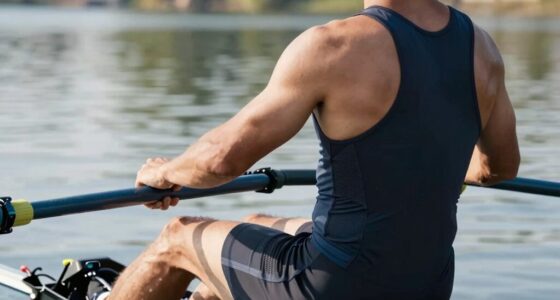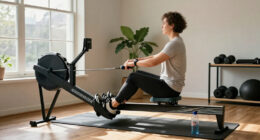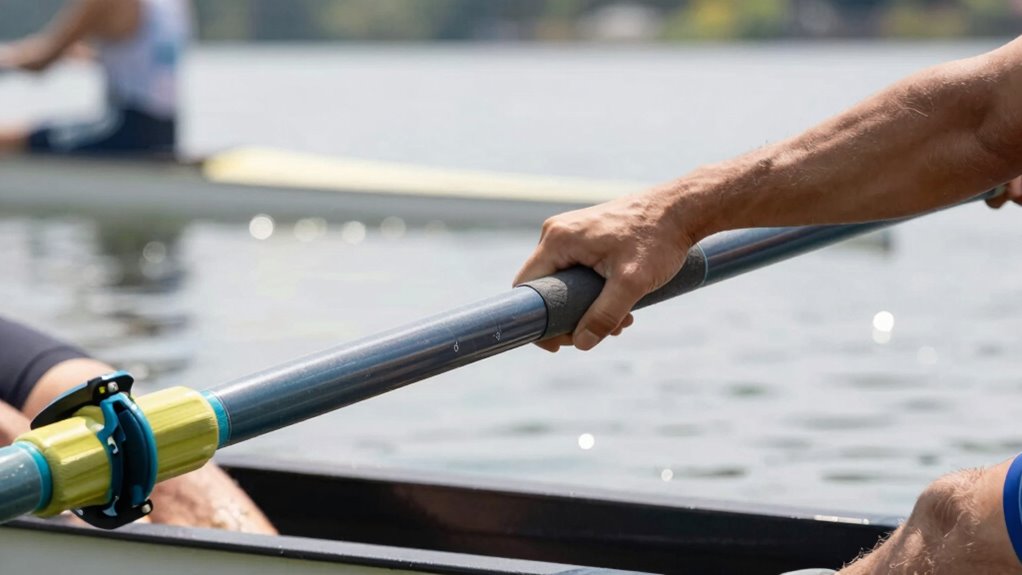

Many new rowers believe that setting the damper higher automatically improves their workout, but this isn’t true. A high damper number increases airflow and resistance, which can lead to poor technique and fatigue. Instead, focus on moderate settings that match your skill level and goals. Proper technique, like keeping a straight back and engaging your core, is more important than simply turning up the damper. Keep exploring to learn how to adjust your damper effectively for better results.

Get workout gear delivered free with Prime
- Fast, free delivery on millions of items
- Prime Video, Amazon Music and more included
- Member-only deals all year
Key Takeaways
- Higher damper settings don’t always mean better workouts; they can cause poor technique and fatigue.
- Beginners often mistake damper number for workout intensity, leading to improper adjustments.
- Proper rowing technique is more important than damper setting; focus on form first.
- Moderate damper levels promote better posture and efficient energy use.
- Understanding airflow and resistance helps troubleshoot and optimize damper adjustments effectively.
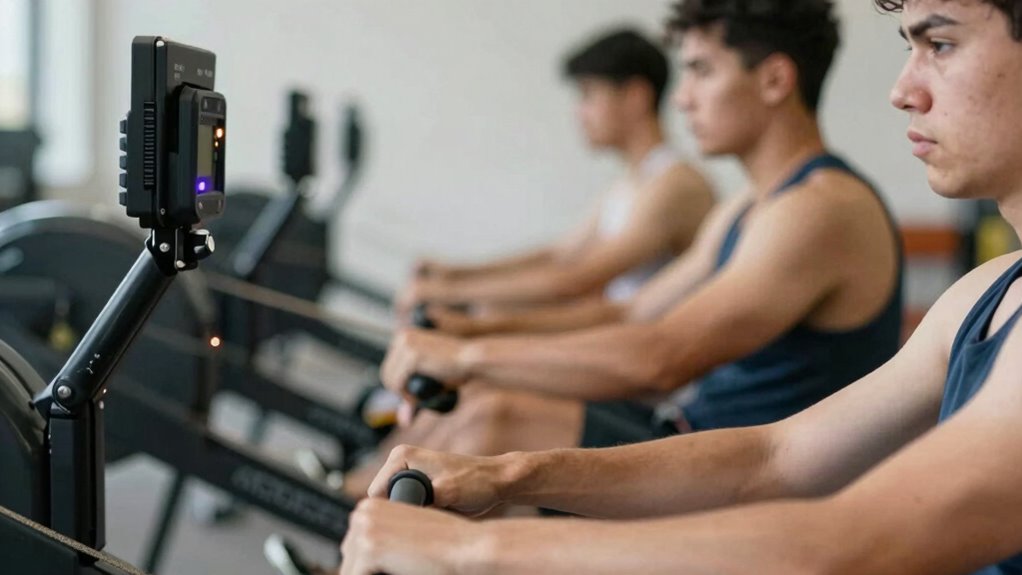
Have you ever struggled to find the right damper setting on your heating or cooling system? If so, you’re not alone—especially if you’re new to rowing. The same confusion can happen with damper settings on a rowing machine, where adjusting the damper impacts how hard or easy it feels to pull each stroke. Many beginners get caught up in the idea that a higher damper number means better workout, but that’s not always true. Just like with equipment maintenance, understanding how the damper works and how to adjust it correctly is key to improving your rowing technique and avoiding frustration.
The damper acts like a sail, controlling the airflow into the flywheel or fan, which in turn influences resistance. If you set it too high, you might feel like you’re pulling against a mountain, which can lead to poor technique and fatigue. Conversely, setting it too low might make your strokes feel too light or unchallenging. Many new rowers think that cranking the damper up to a high number will give them a better workout, but in reality, it often causes bad habits and inefficient movement. Instead, it’s better to start with a moderate setting and focus on perfecting your rowing technique—keeping your back straight, engaging your core, and driving with your legs. This helps ensure you’re using the machine effectively, regardless of the damper setting. Recognizing how the damper interacts with resistance can also aid in troubleshooting issues and maintaining consistent resistance, especially when equipment is not properly maintained. Additionally, understanding the fundamentals of resistance can help you make more informed adjustments to optimize your workout. Becoming familiar with how airflow and resistance work together can help you fine-tune your settings for the most effective session. Moreover, understanding the relationship between airflow and effort can help you develop a more efficient rowing rhythm.
rowing machine damper adjustment
As an affiliate, we earn on qualifying purchases.
As an affiliate, we earn on qualifying purchases.
Frequently Asked Questions
How Often Should I Adjust the Damper During Practice?
You should adjust the damper sparingly, focusing on maintaining consistent rowing technique rather than frequent changes. Typically, make adjustments only when you’re trying to refine your stroke or adapt to different workout intensities. Remember, proper equipment maintenance is key—make sure the damper is clean and functioning properly. Regularly check the damper setting to avoid confusion and guarantee peak performance, but don’t overthink adjustments during your practice sessions.
Can Damper Settings Affect Boat Speed?
You might find it surprising, but damper settings do influence boat speed. When you adjust the damper, it impacts your rowing technique and boat stability, which directly affect how efficiently you move through the water. Higher settings can make the boat feel more stable, but may slow you down, while lower settings promote quicker strokes. Finding the right balance improves your technique and maximizes speed, making every stroke count.
What’s the Ideal Damper Setting for Beginners?
For beginners, an ideal damper setting is around 3 or 4. This allows you to focus on proper rowing technique without making the boat feel too heavy or too light. As you progress, you can adjust based on comfort and performance. Remember, good equipment maintenance guarantees the damper functions smoothly, and practicing proper technique helps maximize your efficiency in the boat. Keep experimenting to find what works best for you.
Do Different Water Conditions Require Different Damper Adjustments?
Yes, different water conditions need different damper adjustments. When water viscosity is high, like in colder conditions, you might want to lower the damper to avoid excessive resistance. On river currents, a higher damper setting can help you maintain control and stability. Adjusting your damper based on water viscosity and currents guarantees smoother rowing, better power transfer, and safer handling, especially when conditions change unexpectedly.
How Do I Know if My Damper Setting Is Correct?
Think of your damper setting as the tempo of your rowing symphony. If your strokes feel smooth, powerful, and consistent, you’re likely on the right track. Pay attention to your equipment maintenance—clean and check your equipment regularly—and focus on refining your rowing technique. If you’re struggling or feeling off-balance, it might be time to tweak the damper slightly and see if your rhythm improves.
indoor rowing machine resistance knob
As an affiliate, we earn on qualifying purchases.
As an affiliate, we earn on qualifying purchases.
Conclusion
Understanding how to set the damper correctly can substantially improve your rowing efficiency and reduce frustration. Many new rowers struggle with this, but remember, about 60% of beginners report better performance once they find their ideal setting. Don’t get overwhelmed—take the time to experiment and listen to your body. With patience and practice, you’ll master the damper, making every stroke smoother and more effective. Keep rowing, and don’t let confusion hold you back!
best rowing machine for beginners
As an affiliate, we earn on qualifying purchases.
As an affiliate, we earn on qualifying purchases.
rowing machine with adjustable resistance
As an affiliate, we earn on qualifying purchases.
As an affiliate, we earn on qualifying purchases.
Halloween Picks
halloween
As an affiliate, we earn on qualifying purchases.